









What's Happening?
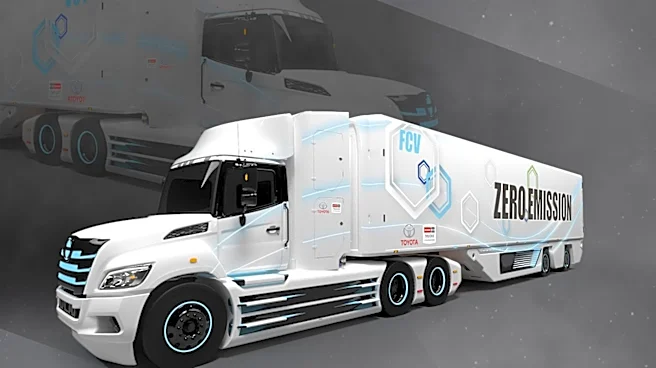
Toyota Motor North America has partnered with Hyroad Energy to deploy 40 hydrogen fuel cell Class 8 trucks in Southern California. This initiative is part of a broader trend in the commercial transportation sector to explore alternative fuels as diesel
costs rise and become increasingly volatile. Hydrogen fuel cell electric vehicles offer zero tailpipe emissions and maintain operational characteristics similar to diesel trucks, including quick refueling times of 15 to 20 minutes and ranges approaching 500 miles. Other manufacturers, such as Hyundai and Volvo, are also investing in and testing hydrogen-powered commercial vehicles, with Hyundai's XCIENT Fuel Cell program accumulating nearly one million miles in North America. Major manufacturers like Daimler Truck, Volvo Group, cellcentric, and Toyota are collaborating on fuel-cell technology development to accelerate its commercialization for heavy-duty transportation.
Why It's Important?
The deployment of hydrogen fuel cell trucks by Toyota Motor North America signifies a significant step towards decarbonizing the heavy-duty transportation sector in the U.S. This move is crucial as fuel expenditures represent one of the largest and most unpredictable operating costs for fleets, driven by geopolitical and economic instability affecting crude oil supply chains. The adoption of hydrogen technology can provide cost stability and reduce reliance on volatile diesel markets. For U.S. industries, particularly logistics and freight, this offers a pathway to meet environmental regulations while maintaining operational efficiency. The collaboration among major automotive players in fuel-cell technology development indicates a collective industry effort to establish hydrogen as a viable long-term alternative, potentially creating new infrastructure demands and job opportunities in the hydrogen production and distribution sectors. This shift could also influence public policy towards supporting hydrogen infrastructure development and incentives for adoption.
What's Next?
The deployment of these 40 hydrogen fuel cell trucks will serve as a critical pilot for broader adoption of hydrogen technology in commercial transportation. Success in Southern California could lead to expanded deployments in other regions across the U.S., contingent on the development of robust hydrogen refueling infrastructure. Further collaboration among manufacturers is expected to accelerate technological advancements and reduce costs, making hydrogen fuel cell vehicles more competitive. Stakeholders, including fleet operators, energy companies, and policymakers, will closely monitor the performance and economic viability of these trucks. This initiative is likely to spur further investment in hydrogen production, storage, and distribution networks, potentially leading to new partnerships and regulatory frameworks designed to support the transition to a multi-fuel future for transportation. The long-term goal is to integrate these technologies into mainstream commercial operations, reducing the carbon footprint of the logistics industry.
Beyond the Headlines
The move towards hydrogen fuel cell trucks by Toyota Motor North America highlights a deeper strategic shift in the automotive industry's approach to electrification. While battery electric vehicles (BEVs) are gaining traction in passenger and lighter commercial segments, hydrogen fuel cells are emerging as a strong contender for heavy-duty applications where range, payload, and rapid refueling are critical. This dual-path strategy acknowledges the diverse needs of the transportation sector and avoids a singular reliance on one electrification technology. Ethically, this transition addresses environmental concerns by reducing emissions, contributing to cleaner air in urban areas. Legally, it may necessitate new regulations for hydrogen safety, infrastructure, and fuel standards. Culturally, it represents a move away from fossil fuel dependency, fostering innovation and potentially reshaping the energy landscape of the U.S. The long-term implications include a more diversified energy portfolio for transportation and a potential redefinition of energy security.