





What's Happening?
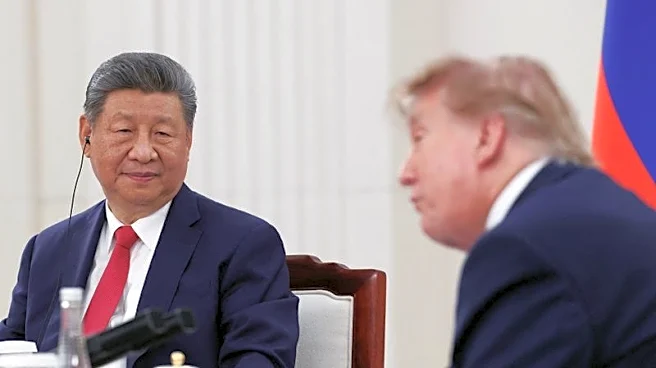
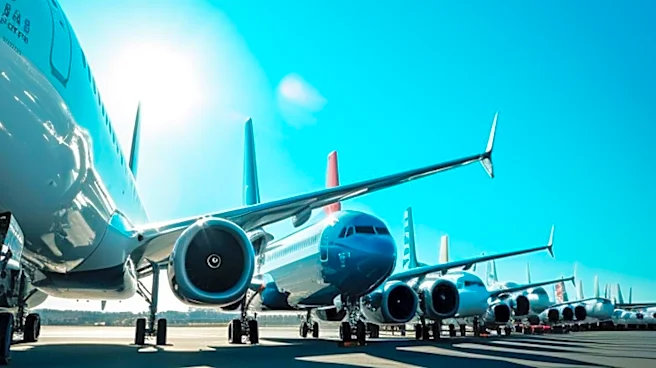
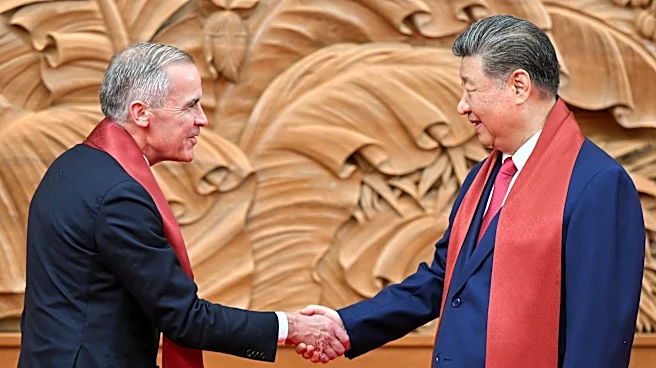
President Donald Trump stated on Monday that he believes China will agree to purchase an additional 250 Boeing airplanes. This announcement comes days after his meeting with Chinese leader Xi Jinping. Previously, in May, China had committed to buying
200 Boeing airplanes, a figure lower than analysts had projected. At that time, President Trump suggested the order could potentially increase to as many as 750 planes. Boeing CEO Kelly Ortberg had also indicated in May that the 200-airplane commitment was merely an 'initial tranche' of a potentially much larger deal. Discussions prior to the May summit involved Boeing, Chinese, and U.S. officials considering a deal for up to 500 jets. The provisional agreement made in May, coinciding with President Trump's summit in Beijing, allowed Boeing to re-enter competition for Chinese jetliner orders, after being largely excluded since 2017.
Why It's Important?
This potential order signifies a significant boost for Boeing and the U.S. aviation industry, especially given China's projected demand for approximately 9,000 new jets by 2045, making it the largest aviation market globally. For years, European rival Airbus had been expanding its market share in China while Boeing faced exclusion. A substantial order from China would help Boeing regain its competitive footing and secure a larger portion of this critical market. Furthermore, the Trump administration has been leveraging China's reliance on U.S. aviation suppliers in trade negotiations. The Commerce Department has reportedly slowed export licensing for airplane parts to China and limited shipments to China's state-owned planemaker, COMAC, to prevent stockpiling, indicating a strategic use of aviation trade as a negotiation tool.
What's Next?
The next steps involve the formalization of this anticipated order from China. While President Trump expressed confidence, the actual agreement and its terms will need to be finalized. The U.S. Trade Representative Jamieson Greer had previously noted in September that China was making good progress on the 200 orders announced in May, suggesting a positive trajectory for further deals. The ongoing trade negotiations between the U.S. and China will likely influence the timing and scale of future aviation purchases. Boeing will be keen to secure these orders to solidify its position in the Chinese market, while the U.S. government may continue to use aviation deals as leverage in broader trade discussions.
Beyond the Headlines
The potential for China to purchase more Boeing aircraft extends beyond immediate economic gains, touching upon geopolitical and trade strategy. The U.S. administration's approach of linking aviation sales to broader trade negotiations highlights a strategic shift where commercial deals are intertwined with foreign policy objectives. This could set a precedent for how the U.S. engages with other major trading partners, using its technological and industrial strengths as bargaining chips. The long-term implications for global aviation could see increased competition and strategic maneuvering between major aircraft manufacturers and their respective governments, as access to lucrative markets like China becomes a key battleground in international trade relations.