







What's Happening?
Toshisuke Kanazawa, a 90-year-old Japanese bodybuilder with 19 national titles, continues to train six days a week. He attributes his sustained strength and physical condition to three core rules: prioritizing recovery, aiming for seven hours of sleep
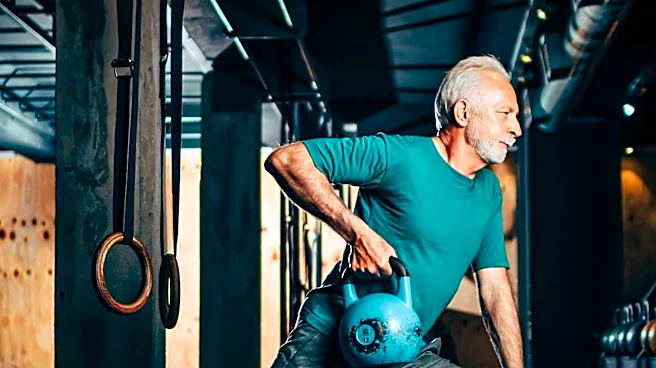
nightly, and adapting training to his current body condition. Kanazawa emphasizes that as one ages, recovery times lengthen, making adequate rest between sets crucial for consistent training. He ensures he gets around seven hours of quality sleep each night, recognizing its importance for maintaining health, cognitive function, and reducing accelerated biological aging. Furthermore, he has transitioned from free weights to resistance machines, which provide a fixed movement path, reducing strain on joints and connective tissues while still allowing for hard training. This adaptive approach enables him to continue his rigorous regimen into his tenth decade.
Why It's Important?
Kanazawa's longevity in bodybuilding offers valuable insights into sustainable fitness and healthy aging, particularly for older adults. His emphasis on recovery and adequate sleep underscores their critical role, often overlooked in fitness regimens focused solely on intensity. This approach challenges the conventional 'push harder' mentality, advocating for a more mindful and adaptive strategy to exercise as the body changes with age. For the fitness industry, his methods highlight a growing market for age-appropriate training programs and equipment that prioritize joint health and recovery. For individuals, it provides a compelling example that maintaining physical strength and an active lifestyle is achievable well into old age, provided one listens to their body and adjusts accordingly. This perspective can inspire older adults to remain active and seek out fitness routines that support their long-term health rather than risking injury through inappropriate training.
What's Next?
Kanazawa's principles could influence the development of more specialized fitness programs and equipment tailored for older populations. We might see an increased focus on recovery techniques, sleep optimization, and adaptive exercise modalities within the broader fitness community. His story could also encourage more research into the specific physiological benefits of moderate, consistent training and adequate recovery for aging bodies. Fitness coaches and personal trainers may integrate these 'less is more' and 'train the body you have today' philosophies into their practices, particularly when working with older clients. Furthermore, the narrative of a 90-year-old bodybuilder could inspire a cultural shift, promoting the idea that physical activity is a lifelong endeavor that requires continuous adaptation and self-awareness, rather than a pursuit limited to youth or peak performance years.
Beyond the Headlines
Kanazawa's dedication to bodybuilding at 90 transcends mere physical fitness; it speaks to a profound commitment to discipline, self-awareness, and a holistic approach to well-being. His ability to adapt his training, moving from free weights to machines, reflects a deep understanding of his body's changing needs and a pragmatic approach to maintaining health. This embodies a philosophy of 'kaizen' or continuous improvement and adaptation, which is culturally significant in Japan. His story also highlights the psychological benefits of consistent routine and goal-setting, which can contribute to mental sharpness and a sense of purpose in later life. In a society often preoccupied with anti-aging solutions, Kanazawa's example offers a powerful counter-narrative: not about reversing age, but about optimizing the body's capabilities at every stage, embracing the aging process with strength and resilience. This perspective can foster a more positive and realistic view of aging and physical potential.