


What's Happening?
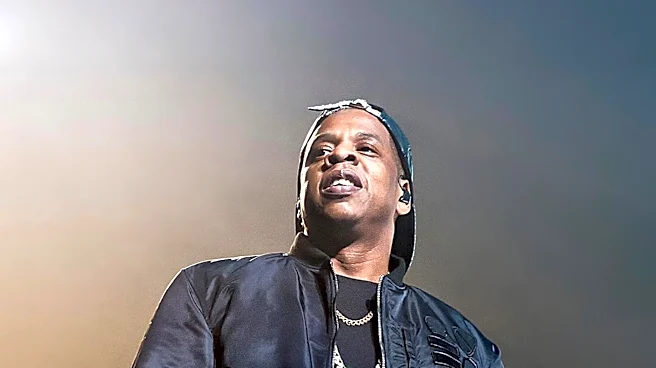
Hip-hop mogul Jay-Z is officially set to headline the Super Bowl LXI halftime show on February 14, 2027, at SoFi Stadium in Inglewood, California. The announcement was made by the NFL, Roc Nation, and Apple Music during a Monday Night Football game. This
will be Jay-Z's first time headlining the event, despite his entertainment company, Roc Nation, having produced the halftime show since 2019. NFL Commissioner Roger Goodell stated he had encouraged Jay-Z to take the stage since their partnership began. Jay-Z, whose real name is Shawn Carter, is a 25-time Grammy Award winner with a career spanning over three decades, known for albums like 'Reasonable Doubt' and 'The Blueprint.' However, his selection has drawn criticism, with NFL Hall of Famer Terrell Owens raising concerns about a potential conflict of interest, questioning why Jay-Z would appoint himself as a performer while his company is responsible for selecting other artists.
Why It's Important?
Jay-Z's headlining performance at the Super Bowl LXI halftime show carries significant implications for both the entertainment industry and the NFL's relationship with its performers. As Roc Nation has been instrumental in shaping the Super Bowl halftime show's artistic direction for several years, Jay-Z's decision to perform himself could be seen as either a culmination of his influence or a move that blurs ethical lines. The Super Bowl halftime show is one of the most-watched musical events globally, offering unparalleled exposure. His performance will undoubtedly draw massive viewership, potentially boosting his already extensive legacy. However, the conflict of interest allegations from figures like Terrell Owens could spark broader discussions about transparency and fairness in the selection process for such high-profile events, especially when the producer is also a potential performer. This situation could influence future contractual agreements between sports leagues and entertainment companies, potentially leading to stricter guidelines regarding self-selection for roles.
What's Next?
Following the announcement, attention will now shift to the specifics of Jay-Z's performance, including potential guest artists and the overall creative direction he will take for the Super Bowl LXI halftime show. While no additional performers have been announced, the Super Bowl halftime show often features collaborations, which could either amplify the spectacle or further fuel discussions about equitable opportunities for other artists. The debate surrounding the perceived conflict of interest is likely to continue, potentially prompting further statements from the NFL, Roc Nation, or Jay-Z himself to address the concerns raised. This situation may also lead to increased scrutiny of how future Super Bowl halftime performers are selected, especially if Roc Nation continues its production role. The performance itself will be a major cultural event, broadcast on ESPN, ABC, and Disney+, and will be closely watched for its artistic merit and its broader implications for the music and sports industries.
Beyond the Headlines
The selection of Jay-Z as the Super Bowl LXI halftime headliner, given his company's role in producing the show, highlights a growing trend of artists and entertainment moguls consolidating power across various facets of the industry. This move could be interpreted as a strategic business decision, allowing Jay-Z to leverage his influence and platform to an unprecedented degree. However, it also raises deeper questions about artistic integrity and the potential for gatekeeping within the entertainment landscape. The backlash from some fans and industry figures suggests a desire for more diverse opportunities and a transparent selection process, especially for events with such global reach. This situation could set a precedent for how major events navigate relationships with powerful entertainment entities, potentially leading to calls for independent oversight or more formalized ethical guidelines to ensure fairness and prevent perceived self-dealing. The long-term impact could be a re-evaluation of how such partnerships are structured to maintain public trust and foster a more inclusive environment for artists.