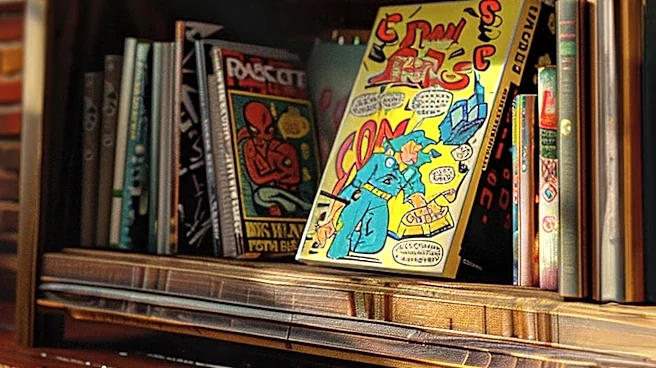




What's Happening?
A detailed exploration into the origins of the vintage comics aesthetic has been presented, focusing on the historical development of comic book printing techniques. The article delves into the use of newsprint and the evolution of color printing in comics from
the 1930s to the 1980s. It highlights the transition from the use of Ben Day dots to Craftint Multicolor and later to acetate methods, which defined the visual style of comics during these eras. The piece also discusses the impact of the newspaper industry's printing technologies on the comic book format, emphasizing the role of color separation in creating the iconic look of vintage comics.
Why It's Important?
Understanding the historical context of comic book printing is crucial for appreciating the artistic and cultural significance of vintage comics. The aesthetic choices made during the early days of comic book production have had a lasting impact on the medium, influencing both creators and collectors. This exploration sheds light on the technological advancements that shaped the industry and highlights the importance of preserving these techniques for future generations. The vintage comic aesthetic continues to inspire modern artists and remains a beloved aspect of comic book culture.
What's Next?
The article is part one of a two-part series, with the next installment expected to delve deeper into the specifics of color separation techniques used in different eras of comic book production. This continuation will likely provide further insights into the technological and artistic evolution of comics, offering a comprehensive understanding of the medium's development. Collectors, historians, and enthusiasts can look forward to more detailed analyses and historical anecdotes in the upcoming part.