






What's Happening?
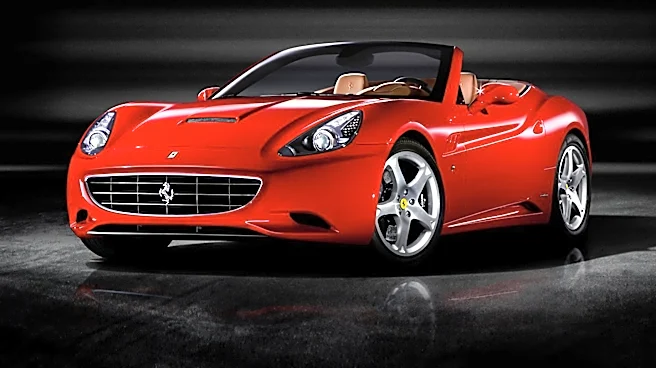
Ferrari N.V. (NYSE:RACE) is currently valued at approximately $73 billion, with shares trading near $388, reflecting a price-to-earnings multiple of around 39 times. This valuation positions Ferrari more akin to luxury brands like Hermès rather than traditional
mass automakers such as General Motors. The company's strategy involves deliberately limiting production, shipping only about 13,700 cars annually, which is fewer than the market demand. This manufactured scarcity has resulted in a years-long waiting list for its vehicles, with orders currently extending through 2027. A significant portion of Ferrari's revenue, over 20% from car and parts, comes from personalization options, contributing to a core profit margin close to 39%. This business model relies on increasing prices and customization options for a relatively fixed number of cars, similar to how luxury houses manage their product lines.
Why It's Important?
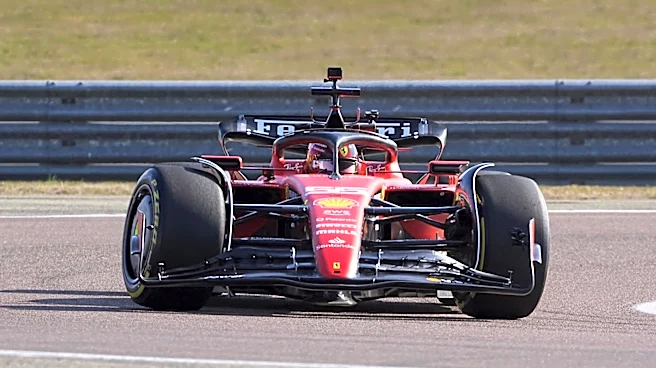
Ferrari's unique scarcity-driven business model grants it exceptional pricing power, insulating it from discounting pressures and providing resilience during economic downturns. Its ultra-wealthy global clientele ensures diversified demand, minimizing the impact of regional economic fluctuations. The high personalization mix further boosts profit margins without requiring increased production volume. Additionally, the brand benefits from the 'halo effect' of its Formula 1 involvement and brand licensing, offering supplementary revenue streams. This approach challenges conventional automotive industry economics, where volume often dictates profitability. For investors, the high valuation reflects a belief in the sustainability of this luxury-house economic model, where brand mystique and exclusivity are paramount. However, this also means that growth is primarily dependent on price and mix increases, with limited room for volume expansion.
What's Next?
The sustainability of Ferrari's high valuation hinges on its ability to maintain its brand mystique and pricing power, particularly as the automotive industry transitions towards electric vehicles. The company's new 'Elettrica' initiative, introducing battery-powered models, presents a critical test. Investors will be closely watching whether the shift to electric powertrains impacts the brand's traditional appeal, which has historically been tied to the performance and sound of its V12 engines. Any perceived dilution of this mystique or a slowdown in global luxury demand, especially from key markets like China, could lead to a re-evaluation of the stock. The company's ability to continue commanding premium prices and high personalization rates on a fixed production volume will be crucial for its future financial performance.
Beyond the Headlines
The core of Ferrari's business model lies in its mastery of psychological pricing and brand perception, effectively selling an experience and status symbol rather than just a vehicle. This strategy highlights a broader trend in the luxury market where exclusivity and bespoke offerings command significant premiums. The challenge for Ferrari, as it navigates technological shifts like electrification, is to integrate new technologies without compromising the core elements that define its luxury appeal and justify its high price point. The 'scarcity moat' is a powerful economic tool, but its long-term viability depends on maintaining an almost intangible sense of desire and aspiration among its target demographic, even as the product itself evolves. This case study offers insights into how non-traditional business models can thrive by focusing on brand equity and controlled supply in niche markets.