
What's Happening?
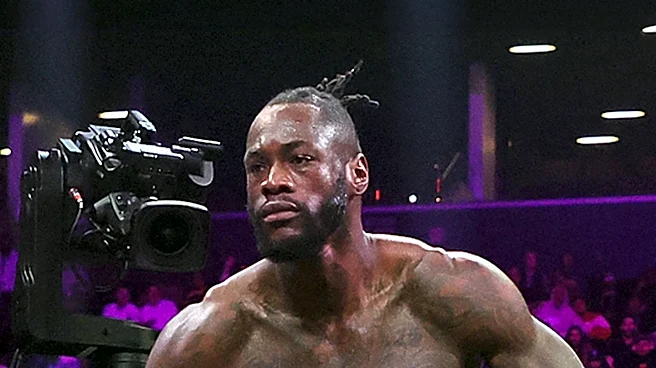
Tyson Fury has publicly stated his belief that Deontay Wilder should retire from boxing, citing the significant damage Wilder sustained in their previous three fights. According to Mirror, Fury expressed
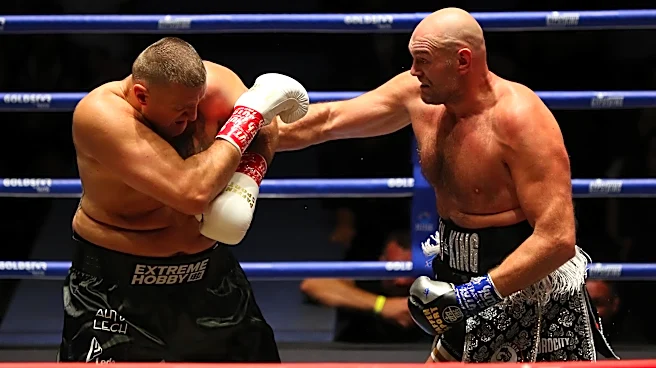
concern that Wilder has taken too much punishment and should not continue his career. Wilder is scheduled to fight Jai Opetaia on the undercard of Fury's upcoming bout with Anthony Joshua in December. Fury argues that Wilder's performance against Chisora, where Chisora reportedly withstood Wilder's punches without significant impact, indicates a decline in Wilder's power and overall ability, suggesting it's time for him to step away from the sport.
Why It's Important?
Tyson Fury's comments highlight a critical issue within professional boxing: fighter safety and the long-term health implications of continuing a career after sustaining significant damage. This discussion is important for U.S. boxing as it brings attention to the responsibilities of commissions, promoters, and trainers in protecting athletes. While Wilder possesses considerable power, Fury's remarks suggest that his ability to absorb punishment and deliver effective blows may have diminished, potentially putting him at greater risk. The debate over when a fighter should retire impacts public perception of the sport, potentially influencing regulatory decisions and the support systems available to boxers. For Wilder, continuing to fight despite such warnings could either lead to a career resurgence or further health risks, affecting his legacy and financial well-being.
What's Next?
Deontay Wilder is set to face Jai Opetaia in December. The outcome of this fight will be crucial in validating or refuting Fury's claims about Wilder's current state. A strong performance from Wilder could silence critics and potentially lead to a high-profile match against Oleksandr Usyk, as mentioned in the source. Conversely, a poor showing could intensify calls for his retirement and raise further questions about fighter safety. The boxing community, including fans, media, and regulatory bodies, will closely watch this fight for signs of Wilder's physical condition and competitive viability. Fury's ongoing commentary will likely continue to shape the narrative around Wilder's career.
Beyond the Headlines
This situation delves into the ethical considerations surrounding a fighter's career longevity and the pressures they face. Beyond the physical toll, there's immense psychological pressure on boxers to continue fighting, often driven by financial necessity, the desire for redemption, or the pursuit of legacy. Fury's remarks, while critical, also underscore a broader concern for athlete welfare in a sport known for its brutality. This discussion could prompt deeper conversations about mandatory medical evaluations, retirement counseling, and support systems for boxers transitioning out of the sport. It also touches on the role of rivalries and personal opinions in shaping public discourse around athletes' careers.