





What's Happening?
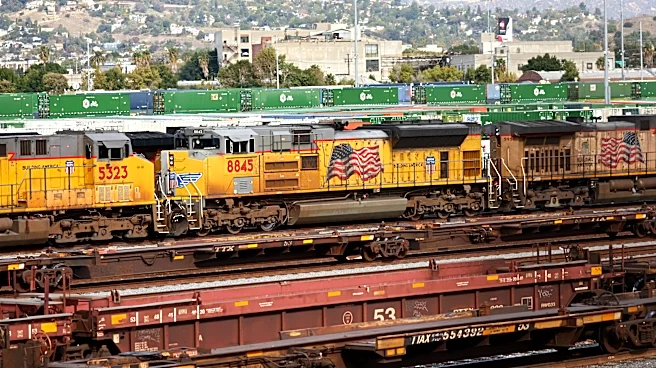
The North American railroad industry has undergone a significant transformation since the late 20th century, marked by deregulation and strategic mergers. A pivotal moment was the Staggers Rail Act, signed by President Carter on October 14, 1980, which
granted railroads greater freedom in setting prices and contracts. This deregulation followed a period of low industry returns and bankruptcies, notably the Penn Central filing for reorganization in 1970. Post-deregulation, companies like Southern Pacific, under Rob Krebs, were able to drastically reduce shipping costs, such as a car of automobiles from St. Louis to Los Angeles dropping from $6,000 to $1,500. The industry also saw major consolidations, including the merger of Santa Fe with Burlington Northern in 1994, forming BNSF, and the division of Conrail between CSX and Norfolk Southern. Key figures like Hunter Harrison, who started at $2 an hour in 1963, rose through the ranks, notably improving operating ratios at Illinois Central and later at Canadian National and Canadian Pacific, demonstrating the impact of operational efficiency in the deregulated environment.
Why It's Important?
The deregulation and subsequent restructuring of the North American railroad industry have had profound impacts on the U.S. economy and logistics. The Staggers Rail Act revitalized a struggling industry, enabling railroads to become more competitive and efficient, which in turn lowered transportation costs for various goods across the country. This efficiency has been crucial for supply chains, benefiting industries from manufacturing to agriculture by providing more cost-effective shipping options. The consolidation into fewer, larger entities like BNSF and the eventual creation of Canadian Pacific Kansas City, the only railroad spanning Canada, the U.S., and Mexico, has created vast, integrated networks. This integration enhances cross-border trade and logistical capabilities, but also raises questions about market concentration and potential impacts on competition and service for smaller shippers. The industry's evolution reflects a broader trend of deregulation and consolidation seen in other sectors of the U.S. economy.
What's Next?
The North American railroad industry is likely to continue its focus on operational efficiency and network optimization. With the establishment of Canadian Pacific Kansas City, the industry has achieved a new level of continental integration, which will likely lead to further streamlining of cross-border logistics and increased trade flows between Canada, the U.S., and Mexico. Future developments may include continued investment in technology to enhance efficiency, such as advanced signaling systems and predictive maintenance. The industry will also need to navigate evolving regulatory landscapes, environmental concerns, and competition from other modes of freight transportation. Stakeholders, including shippers, policymakers, and investors, will closely monitor how these large railroad entities balance efficiency gains with service quality and competitive pricing in the coming years.
Beyond the Headlines
Beyond the immediate economic and logistical implications, the transformation of the railroad industry reflects broader shifts in U.S. industrial policy and corporate strategy. The move from heavy regulation to deregulation in the 1980s marked a significant ideological shift in how essential services were managed, emphasizing market forces over government oversight. This change had ethical dimensions, as it aimed to foster innovation and efficiency but also raised concerns about potential impacts on labor, safety, and monopolistic practices. The industry's history, from its early builders like James J. Hill to modern leaders like Hunter Harrison, showcases a continuous drive for efficiency and expansion. The current structure, with a few dominant players, highlights the long-term consequences of consolidation, shaping not only freight movement but also regional economic development and the competitive landscape for various industries reliant on rail transport.