





What's Happening?
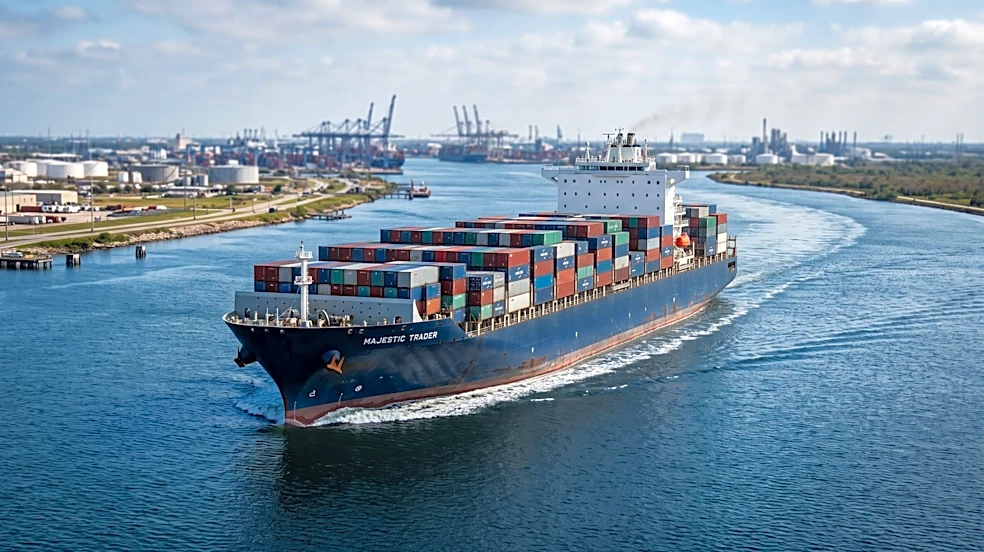
Port Houston has completed its sections of the Project 11 expansion, a significant infrastructure program aimed at enhancing maritime safety, shipping efficiency, and trade capacity along the Houston Ship Channel. The expansion has widened the channel
through Galveston Bay by 170 feet, increasing its width from 530 feet to 700 feet. This improvement is designed to accommodate growing vessel traffic, particularly for U.S. energy exports, petrochemicals, and international cargo. The U.S. Coast Guard, U.S. Army Corps of Engineers, and Houston Pilots have already recognized the widened channel, removing daylight restrictions for larger vessels in Galveston Bay, which allows for more efficient vessel movement and reduces waiting times. Port Houston CEO Charlie Jenkins highlighted the collaborative effort between the port, the Army Corps, industry, and elected leaders in achieving this milestone. The project also includes environmental restoration, utilizing dredged materials to create 10 acres of bird islands, 324 acres of oyster reefs, and 800 acres of marsh habitat in Galveston Bay.
Why It's Important?
The completion of Port Houston's sections of Project 11 is crucial for strengthening U.S. supply chain reliability and supporting economic growth. The Houston Ship Channel is a vital artery for the U.S. economy, connecting industrial facilities, energy producers, and logistics operators with global markets. The wider Port of Houston region encompasses over 200 private and eight public facilities, supporting approximately 1.89 million jobs in Texas and 3.53 million nationwide. The economic activity generated by the port is valued at $538 billion in Texas and $987 billion across the U.S. By improving navigation and reducing vessel restrictions, the expansion will allow larger commercial vessels to operate more efficiently, thereby reducing shipping delays and enhancing the flow of goods. This modernization of infrastructure is expected to bolster industrial growth and improve the long-term resilience of U.S. supply chains, benefiting various sectors from energy to manufacturing and logistics.
What's Next?
With Port Houston's sections of Project 11 completed, the remaining improvements led by the U.S. Army Corps of Engineers will continue. The broader program aims to further strengthen shipping efficiency, support industrial growth, and enhance the long-term resilience of U.S. supply chains. The successful collaboration between Port Houston, the U.S. Army Corps of Engineers, industry partners, and government representatives, including significant federal support through the Infrastructure Investment and Jobs Act, sets a precedent for future large-scale maritime infrastructure projects. The environmental restoration efforts, such as the creation of bird islands, oyster reefs, and marsh habitats, will continue to deliver long-term ecological benefits to Galveston Bay. Stakeholders will likely monitor the impact of the expanded channel on vessel traffic, operational efficiency, and economic indicators to assess the full benefits of this significant infrastructure upgrade.
Beyond the Headlines
The Port Houston expansion signifies a broader trend in U.S. infrastructure development, emphasizing the critical role of public-private partnerships in accelerating major projects. The project's integration of environmental restoration through the beneficial reuse of dredged materials highlights a growing commitment to sustainable infrastructure development, where economic progress is balanced with ecological preservation. This approach could serve as a model for other port expansions and dredging projects across the nation, promoting both economic vitality and environmental stewardship. Furthermore, the increased capacity and efficiency of the Houston Ship Channel could influence global trade routes and logistics strategies, potentially attracting more international shipping traffic and investment to the U.S. Gulf Coast. The long-term implications extend to national security, as a more robust and efficient port system enhances the country's ability to move strategic goods and support its energy sector.