



What's Happening?
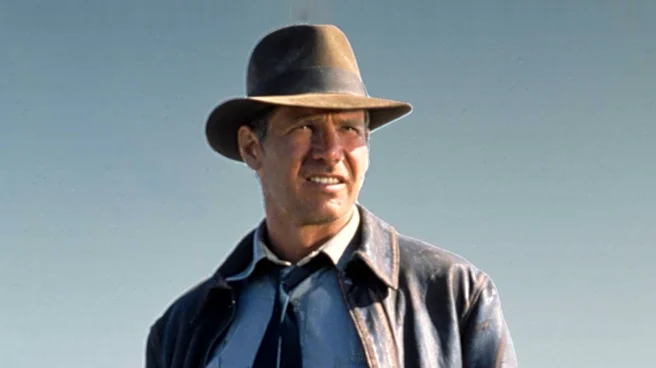
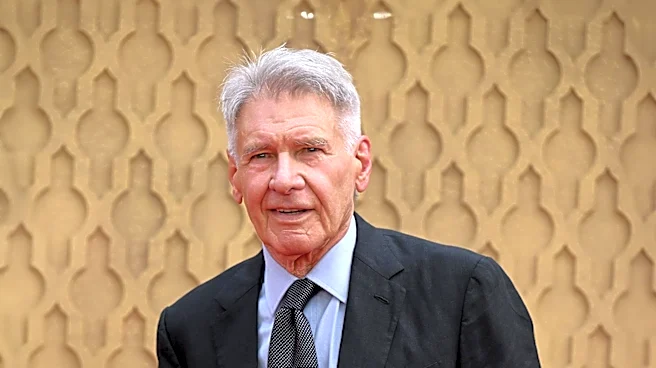
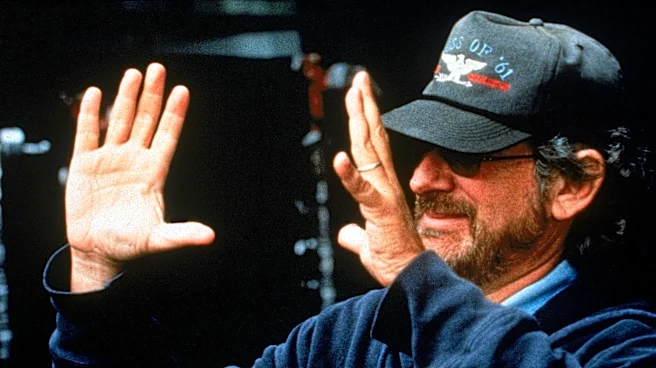
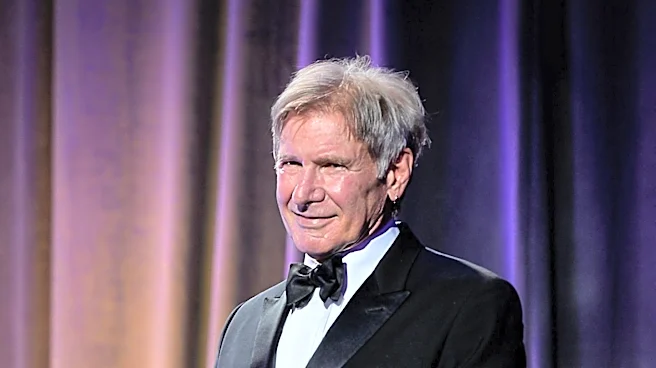
Harrison Ford's iconic role as Indiana Jones in 'Raiders of the Lost Ark' came about due to a scheduling conflict involving actor Tom Selleck. Selleck was initially offered the part by Steven Spielberg and George Lucas after reading for the role and a subsequent
callback. However, Selleck had already filmed the pilot for 'Magnum, P.I.' and CBS, which had purchased the series, refused to allow him to take on both roles. Despite Selleck's willingness to manage both projects, CBS was concerned he would eventually leave 'Magnum, P.I.' This decision led to Selleck backing down from the Indiana Jones role, prompting Spielberg to suggest Harrison Ford as a replacement. Selleck expressed disappointment over missing the opportunity but acknowledged that 'Magnum, P.I.' was not a mere consolation prize, and the interest from Spielberg and Lucas provided him with a sense of security and confidence in his career.
Why It's Important?
This historical casting decision significantly shaped the landscape of Hollywood and popular culture. Harrison Ford's portrayal of Indiana Jones became one of his most recognizable and beloved characters, contributing to his status as a global superstar. The success of the 'Indiana Jones' franchise cemented Ford's career and created a lasting cinematic legacy. Conversely, Tom Selleck's commitment to 'Magnum, P.I.' established him as a household name through a different iconic role. This event highlights the critical impact of studio decisions and contractual obligations on an actor's career trajectory and the ultimate direction of major film franchises. It underscores how a single casting choice can alter the course of entertainment history, influencing subsequent films, merchandise, and the cultural perception of these characters for decades.
What's Next?
While this event is a historical anecdote, its implications continue to resonate in discussions about iconic film roles and the careers of the actors involved. The 'Indiana Jones' franchise has seen multiple sequels and a recent installment, with Harrison Ford reprising his role, demonstrating the enduring appeal of the character he ultimately embodied. Tom Selleck has continued a successful career in television, notably with 'Blue Bloods.' The story serves as a reminder within the entertainment industry of the complex interplay between talent, opportunity, and contractual obligations, which often dictate the paths of major projects and the stars associated with them. Future discussions about 'what-if' scenarios in film history will likely continue to reference this pivotal moment.
Beyond the Headlines
The story of Harrison Ford landing the Indiana Jones role due to Tom Selleck's prior commitment offers a fascinating glimpse into the often-unseen forces that shape cultural phenomena. It illustrates how seemingly minor decisions or contractual details can have monumental ripple effects, not just for individual careers but for entire cinematic universes. This incident also touches upon the concept of 'destiny' in Hollywood, where one actor's missed opportunity becomes another's career-defining moment. It highlights the competitive nature of the industry and the power dynamics between actors, agents, and studios. Furthermore, it underscores the importance of iconic roles in shaping an actor's public image and legacy, demonstrating how a single character can become synonymous with an actor's identity, as is the case with Ford and Indiana Jones.