




What's Happening?
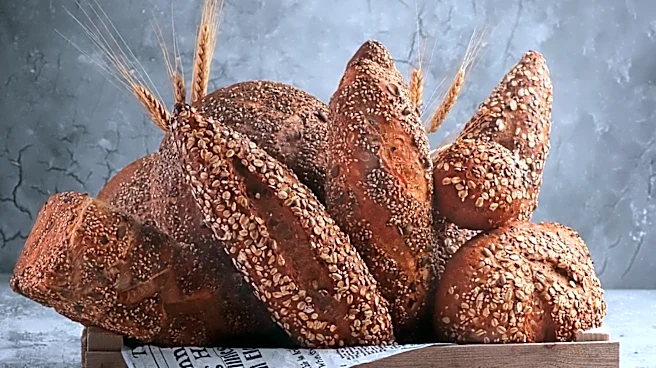
Bread has been a recurring motif in art, symbolizing various themes from religious sacraments to everyday sustenance. In Pieter Bruegel the Elder's 'The Peasant Wedding,' bread is depicted as part of a wedding feast, highlighting its role in communal
gatherings. The painting shows bread being served on a door taken off its hinges, due to the lack of a long enough table, emphasizing the logistical aspects of food in art. This depiction is part of a broader exploration of bread in painting, where it serves as a symbol of life, community, and sometimes scarcity, as seen in works by other artists like Leonardo da Vinci and Salvador Dali.
Why It's Important?
The representation of bread in art reflects broader societal and cultural themes, such as religious beliefs, economic conditions, and social customs. In religious contexts, bread often symbolizes the body of Christ, while in secular settings, it can represent basic sustenance or social status. The depiction of bread in art provides insights into historical periods, revealing how artists used everyday objects to convey deeper meanings. This exploration of bread in art underscores its significance as a universal symbol, connecting diverse cultures and historical moments through a common motif.