








What's Happening?
A new report from the World Benchmarking Alliance (WBA) examines the progress of over 600 influential companies towards electrification, revealing significant gaps despite calls from the COP31 Presidency for electricity's share of global final energy
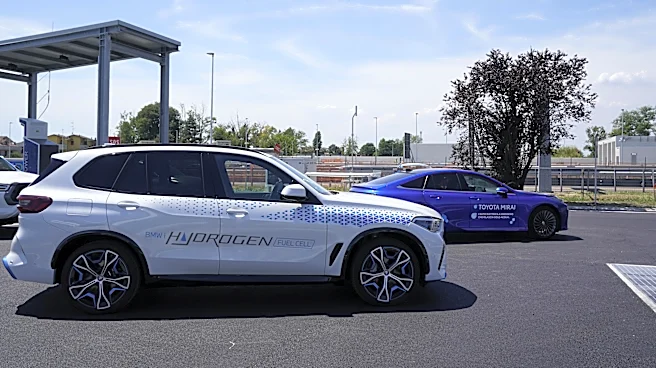
consumption to reach 35% by 2035. The report indicates that while some progress is being made, key sectors are lagging. For instance, automakers are moving too slowly, with low-carbon vehicles accounting for only 13.3% of sales among 18 major automakers in 2025. Additionally, AI-driven electricity demand is growing faster than grids are decarbonizing, with operational emissions at four major cloud and AI companies roughly doubling between 2020 and 2024. A substantial number of companies, ranging from 46% to 64% across key industrial sectors, still lack transparency regarding their renewable energy use and investment.
Why It's Important?
The findings of the WBA report are critical for understanding the real-world challenges in achieving global electrification and decarbonization targets. The slow pace of automakers in transitioning to low-carbon vehicles directly impacts efforts to reduce transportation emissions, a major contributor to climate change. The rapid increase in AI-driven electricity demand, coupled with insufficient grid decarbonization, poses a significant threat to climate goals, as it could lead to a net increase in emissions rather than a reduction. The lack of transparency in renewable energy use and investment by many companies hinders accountability and makes it difficult to assess genuine progress. This situation suggests that while governments set ambitious targets, corporate actions are not yet aligning sufficiently to meet these goals, potentially jeopardizing the 35x35 electrification target and broader climate objectives.
What's Next?
The report emphasizes that the success of the 35x35 target must be measured by more than just electricity's growing share of energy consumption; it must accelerate the replacement of fossil fuels with clean power. This necessitates clear corporate targets, credible investments, and measurable action from companies across various sectors. Future efforts will likely focus on increasing pressure on corporations to enhance transparency, set more ambitious decarbonization goals, and accelerate their transition to renewable energy sources. Regulatory bodies and investors may also demand more stringent reporting on renewable energy use and emissions. The findings could also spur further innovation in grid decarbonization technologies to keep pace with the rising electricity demand from AI and other digital technologies, ensuring that electrification contributes positively to climate action.
Beyond the Headlines
The WBA report highlights a deeper systemic issue: the disconnect between ambitious climate targets and the actual pace of corporate action. The rapid growth of AI and cloud computing, while offering technological advancements, presents an unforeseen challenge to decarbonization efforts due to its significant energy demands. This suggests that technological progress, if not carefully managed, can inadvertently exacerbate environmental problems. The report also implicitly calls for a re-evaluation of corporate responsibility and the role of transparency in driving sustainable practices. The lack of disclosure on renewable energy use indicates a potential 'greenwashing' risk, where companies may claim commitment to sustainability without providing verifiable data. Addressing these issues will require not only technological solutions but also fundamental shifts in corporate governance, investment strategies, and public accountability mechanisms to ensure that economic growth aligns with environmental sustainability.