


What's Happening?
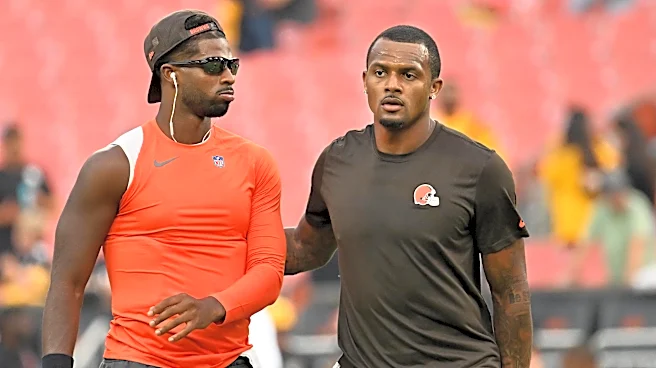
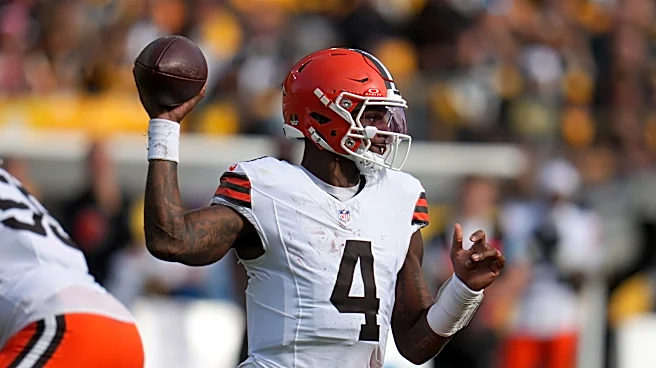
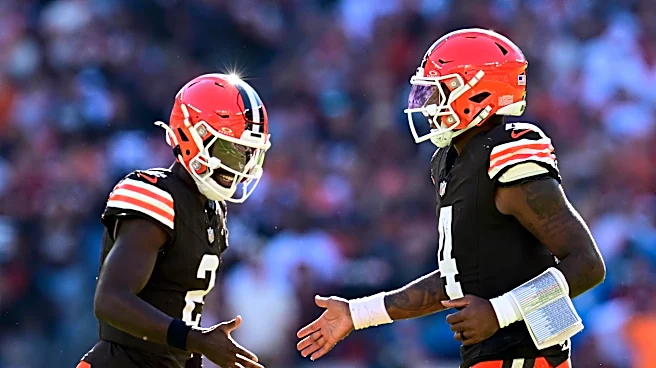
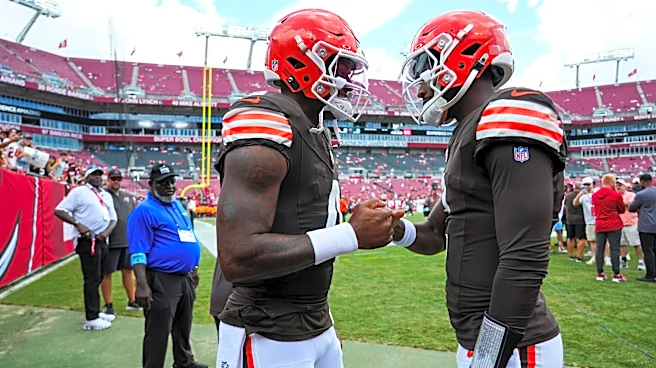
Cleveland Browns fans have criticized veteran reporter Mary Kay Cabot of Cleveland.com for what they perceive as creating a 'reality TV drama' narrative around the team's quarterback situation. The controversy arose after Cabot questioned Deshaun Watson
about head coach Todd Monken's earlier reluctance to name a starter for the upcoming game against the Houston Texans. Monken had initially left the door open for Shedeur Sanders to start after Sanders' strong performance in Week 8 while Watson was out with a concussion. Watson, who has since been named the starter for Week 10, responded to Cabot's question by stating he had 'no idea' why Monken had hesitated. Fans reacted negatively to Cabot's line of questioning on social media, accusing her of stirring the pot for clicks and creating unnecessary drama.
Why It's Important?
This incident highlights the tension between sports journalism and fan perception, particularly in the age of social media. Fans often expect reporters to act as advocates for their team, while journalists aim to provide objective reporting and uncover newsworthy angles, even if they are controversial. The criticism directed at Cabot underscores a broader sentiment among some fans that media coverage can sometimes prioritize sensationalism over factual reporting, potentially creating narratives that are not beneficial to the team. This dynamic can impact the relationship between sports organizations, their fan bases, and the media, influencing how information is consumed and trusted. For reporters, it emphasizes the challenge of balancing journalistic integrity with public relations and fan expectations.
What's Next?
The Browns have officially named Deshaun Watson as the starting quarterback for their Week 10 game against the Houston Texans. This decision will likely quell some of the immediate speculation surrounding the starting role, but the underlying tension between fans and media regarding narrative creation may persist. Reporters like Cabot will continue to cover the team, and their questions will remain a subject of public scrutiny. The team's performance in upcoming games, especially with Watson back at the helm, will be a significant factor in shaping future narratives and fan sentiment. The incident may also lead to ongoing discussions within sports media about the role of reporters in covering team dynamics and managing fan reactions.
Beyond the Headlines
The backlash against Mary Kay Cabot reflects a growing trend where fans, empowered by social media, directly challenge media narratives and the motives of journalists. This phenomenon extends beyond sports, impacting political and cultural discourse. It raises questions about media literacy, the spread of misinformation, and the erosion of trust in traditional journalism. For sports, it highlights how deeply invested fans are in their teams and how quickly they can mobilize to defend against perceived threats or negative portrayals. This dynamic can create a challenging environment for journalists, who must navigate intense public scrutiny while upholding their professional standards and pursuing stories that may not always align with fan desires.