

What's Happening?
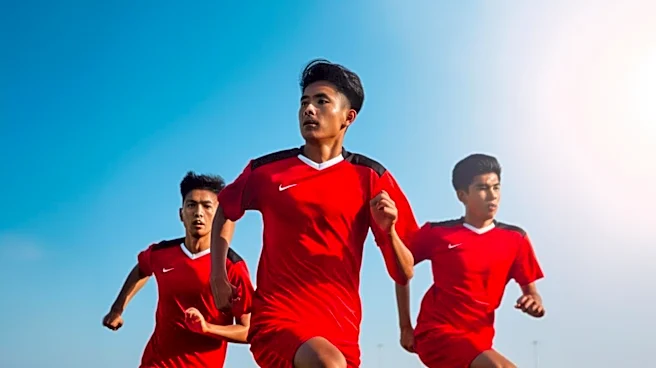
Cristiano Ronaldo Jr., the 16-year-old son of football icon Cristiano Ronaldo, has been called up to Portugal's under-17 squad, marking a significant step in his burgeoning career. This call-up comes shortly after his father concluded his international
career. Ronaldo Jr., who has been developing his skills at Saudi club Al Nassr, where his father currently plays, stands at 6ft 3ins and is noted for his goal-scoring prowess, drawing immediate comparisons to his famous father. He is set to participate in the UEFA Under-17 Championship qualifiers against Andorra, Bulgaria, and Serbia. This development highlights a recurring theme in football, where the sons of legendary players often follow in their fathers' footsteps, attempting to forge their own successful careers in the sport.
Why It's Important?
The emergence of Cristiano Ronaldo Jr. into international youth football underscores the enduring phenomenon of family dynasties in sports. This trend is significant as it often brings immense public and media scrutiny, with young athletes facing the challenge of living up to legendary parental legacies. For national teams, the inclusion of such players can generate considerable interest and potentially attract new fans, while also raising questions about merit versus name recognition. The success or struggle of these second-generation athletes can influence youth development programs and scouting strategies, as clubs and national federations seek to identify and nurture talent, regardless of lineage. It also provides a compelling narrative of continuity and aspiration within the sport.
What's Next?
Cristiano Ronaldo Jr. will now aim to make his mark in the upcoming UEFA Under-17 Championship qualifiers, where his performance will be closely watched. His progress through the youth ranks will determine his potential trajectory in professional football. Should he perform well, he could continue to advance through Portugal's national youth teams and eventually aim for a senior professional contract. The ongoing development of players from famous footballing families will continue to be a point of interest, as they navigate the pressures and opportunities associated with their surnames. Their careers will serve as case studies for how talent, dedication, and lineage intersect in the highly competitive world of professional sports.
Beyond the Headlines
The narrative of football dynasties extends beyond individual talent, touching upon the psychological and sociological aspects of legacy. Sons of football legends often inherit not just athletic genes but also an environment steeped in professional sports, providing unique advantages in terms of training, mentorship, and exposure. However, this also comes with immense pressure and the constant shadow of comparison. The success of players like Paolo Maldini's son, Daniel, or Erling Haaland, whose father also played professionally, demonstrates that while the name opens doors, sustained success requires individual skill and resilience. This phenomenon also raises broader questions about nature versus nurture in athletic achievement and the role of family influence in shaping elite sports careers.