
What's Happening?
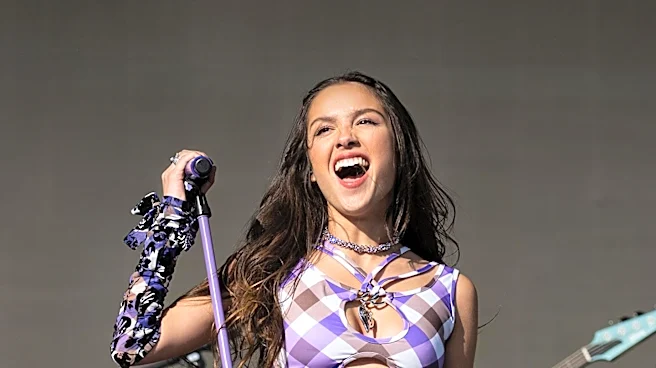
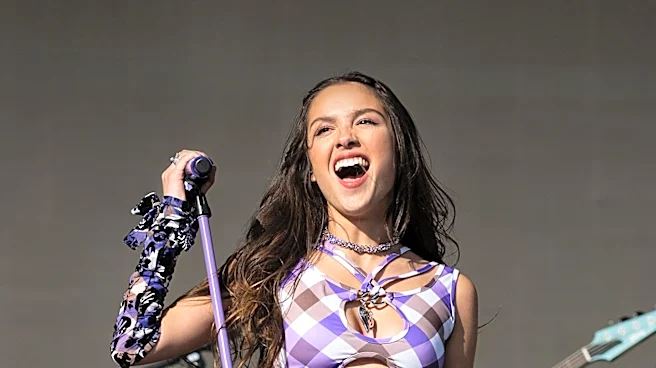
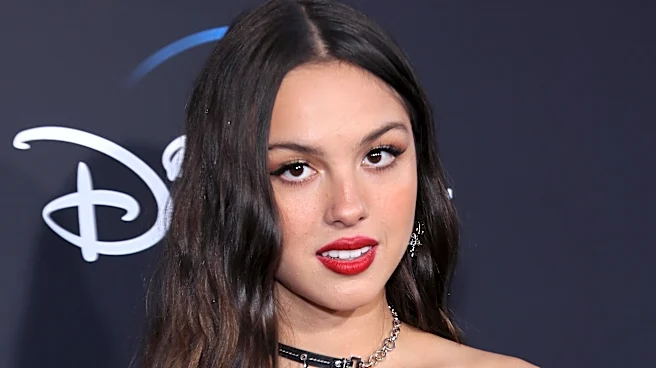
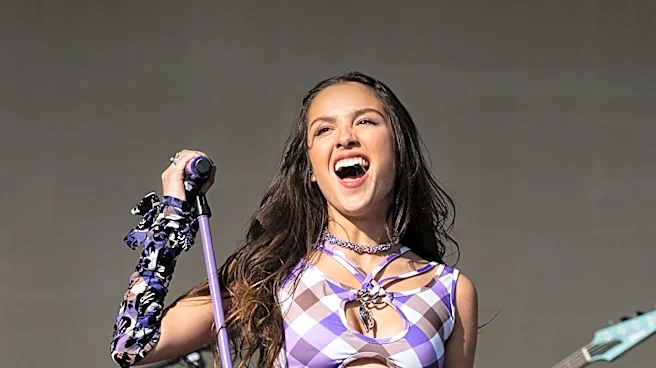
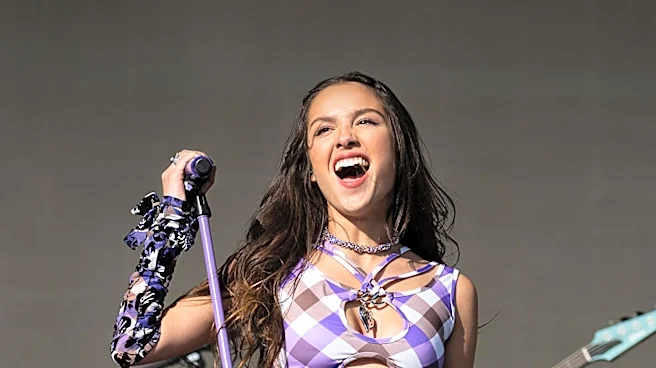
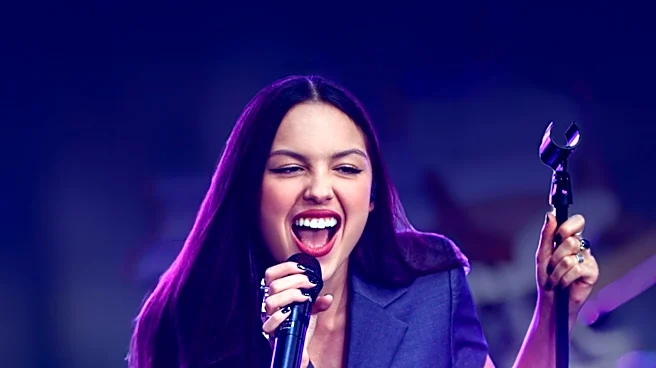
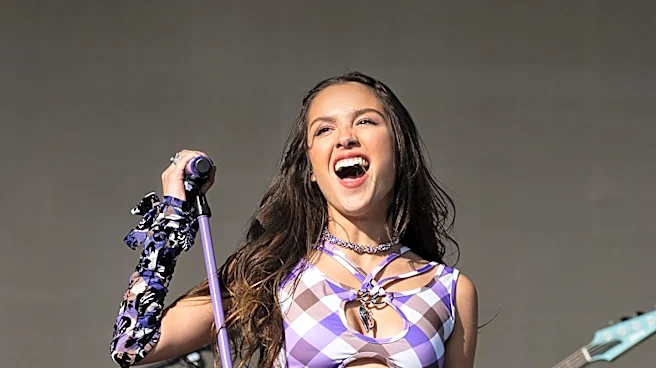
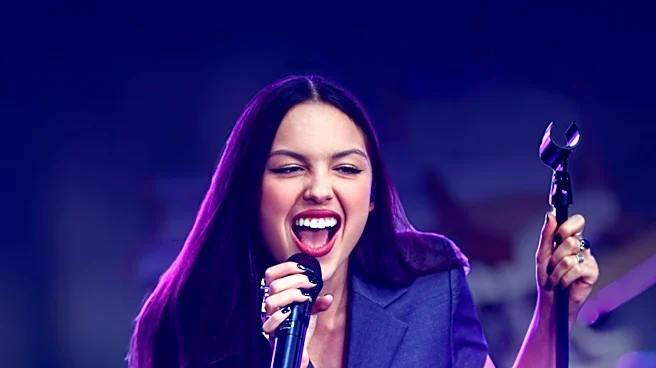
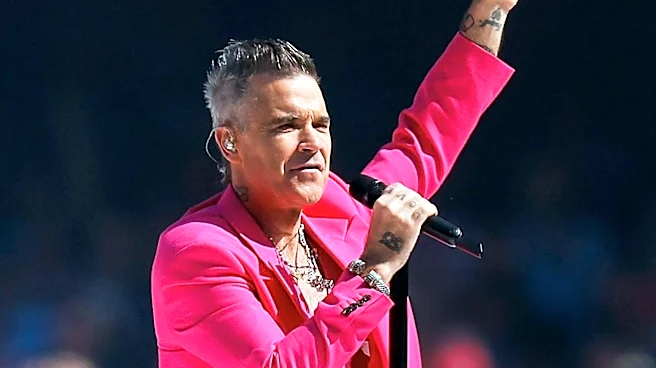
Robbie Williams has publicly defended Olivia Rodrigo following claims of plagiarism regarding her new festive song, 'take me home (4 christmas).' The song, released last week, drew immediate comparisons from listeners. Fans noted similarities to The Waitresses'
'Christmas Wrapping,' while UK audiences also pointed out resemblances to Williams' own hit, 'Candy.' Williams addressed the controversy directly, stating that he is unconcerned by the perceived musical echoes. He emphasized that artists should be protected, but there is a distinction between safeguarding work and pursuing every vaguely familiar sequence of notes as a copyright infringement. Williams indicated he does not know if there is a technical publishing or copyright issue, nor does he wish to investigate it further. He explicitly stated he would not be pursuing any action against Rodrigo.
Why It's Important?
This development is significant as it highlights ongoing discussions within the music industry regarding originality, inspiration, and copyright. Williams' stance, which prioritizes artistic freedom and acknowledges the evolutionary nature of music, could influence how similar situations are perceived and handled in the future. His comments about not wanting to 'frighten the creativity out of everyone' by punishing accidental similarities resonate with many artists who believe that music often builds upon previous works, sometimes unconsciously. This defense from a prominent musician like Williams could offer a degree of protection and validation for emerging artists like Rodrigo, potentially mitigating the negative impact of such claims on their careers and creative processes. It also underscores the subjective nature of musical similarity and the challenges of defining plagiarism in a creative field.
What's Next?
While Robbie Williams has publicly dismissed any personal concern regarding the similarities between Olivia Rodrigo's song and his own, the broader conversation around musical originality and copyright in the digital age is likely to continue. Other parties, such as the estate of The Waitresses, have not yet publicly commented on the matter, which could lead to further discussions or legal considerations. However, Williams' influential voice in defense of Rodrigo may set a precedent or at least temper the intensity of public scrutiny. For Olivia Rodrigo, this public backing from a respected artist could help her navigate the controversy, allowing her to focus on her music rather than prolonged legal battles or public relations crises. The incident may also prompt more artists and legal experts to weigh in on the balance between protecting intellectual property and fostering creative expression.
Beyond the Headlines
The incident involving Olivia Rodrigo and Robbie Williams touches upon deeper ethical and philosophical questions about artistic creation. It raises the question of where inspiration ends and imitation begins, especially in a world where music is constantly sampled, remixed, and reinterpreted. Williams' argument that 'we all stand on the shoulders of people who came before us' speaks to the cumulative nature of art and culture. If every perceived similarity leads to legal action, it could stifle innovation and lead to a more cautious, less experimental creative landscape. This situation also highlights the role of public perception and social media in amplifying plagiarism claims, sometimes before any formal legal assessment. The debate underscores the need for a nuanced understanding of musical influence versus direct copying, a distinction that remains challenging to define definitively in both legal and artistic contexts.