




What's Happening?
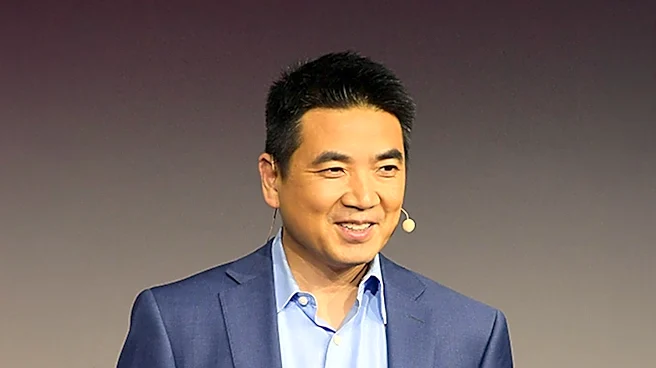
Eric Yuan, the founder of Zoom, has articulated his perspective on work-life balance, stating, “There’s no way to balance. Work is life, life is work,” while emphasizing that family takes precedence when conflicts arise. This view, reported by Fortune
in 2025, suggests a rejection of the traditional concept of 'balance' in favor of an integrated approach where work and life are intertwined. Yuan's philosophy aligns with other prominent CEOs who acknowledge the demanding nature of their roles but differ on the emphasis of hours versus the intrinsic satisfaction derived from work. His stance indicates a belief that a fulfilling career is deeply integrated into one's overall life, rather than being a separate entity to be balanced against personal time. This perspective highlights the intense commitment often required in leadership positions within the technology sector.
Why It's Important?
Eric Yuan's perspective on work-life integration is significant for the U.S. business landscape, particularly in the tech industry, as it reflects a prevalent mindset among high-level executives. His statement, 'Work is life, life is work,' challenges conventional notions of work-life balance, which often advocate for clear distinctions between professional and personal spheres. This viewpoint can influence corporate culture, potentially leading to environments where employees are expected to deeply integrate their work into their lives, blurring the lines between professional and personal time. While Yuan emphasizes family as a priority when conflicts arise, the underlying philosophy could contribute to a demanding work culture. For employees, this might mean increased pressure to be constantly engaged, impacting mental well-being and personal time. For companies, it could foster a highly dedicated workforce, but also risks higher burnout rates if not managed with supportive policies. The discussion around his philosophy underscores the ongoing debate about sustainable work practices in fast-paced industries.
What's Next?
The ongoing discussion surrounding Eric Yuan's work-life philosophy is likely to continue influencing corporate discourse on employee well-being and productivity. As companies increasingly grapple with remote and hybrid work models, the integration of work and life becomes a more complex issue. Yuan's emphasis on family as a priority, even within a 'work is life' framework, could prompt other tech leaders to articulate their own nuanced approaches to employee engagement and support. This might lead to a re-evaluation of company policies regarding flexible work arrangements, mental health resources, and boundaries between professional and personal time. The tech industry, known for its demanding pace, may see further conversations about how to foster dedication and innovation without compromising employee health and family commitments. Future trends could include more personalized approaches to work-life integration, moving beyond a one-size-fits-all 'balance' model.
Beyond the Headlines
Eric Yuan's philosophy, where 'work is life, life is work,' delves into the deeper cultural and psychological aspects of modern professional identity, particularly within the U.S. tech sector. This perspective suggests a shift from viewing work as a separate obligation to seeing it as an integral part of one's personal fulfillment and identity. The ethical implication lies in how this philosophy translates into corporate expectations: while it can foster passion and dedication, it also risks normalizing an 'always-on' culture that could lead to burnout and neglect of personal well-being. The long-term societal shift could be towards a workforce that finds meaning and identity primarily through their careers, potentially redefining traditional family structures and leisure time. This raises questions about the sustainability of such an intense integration and the potential for a widening gap between those who can afford to integrate work seamlessly and those who struggle with the demands. It also highlights the evolving nature of success metrics, moving beyond mere financial gain to include personal fulfillment derived from work.