






What's Happening?
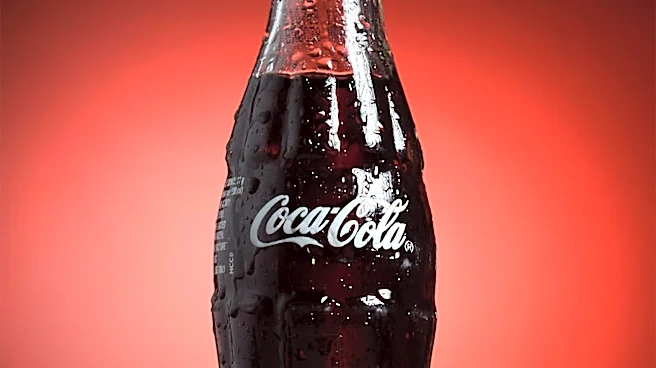
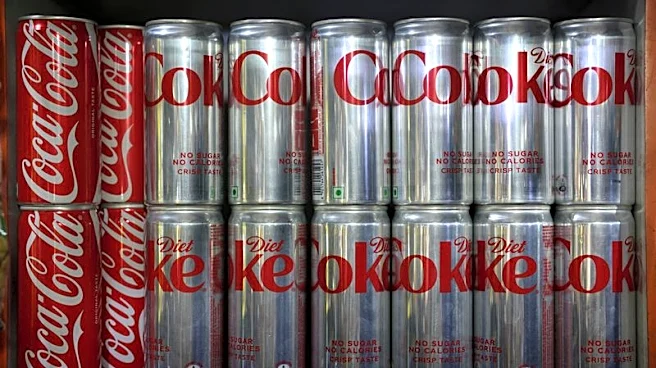
Coca-Cola is implementing a global rebranding strategy to create a more unified appearance across its product packaging. The initiative focuses on emphasizing key elements of the brand's design, such as the iconic red and white colors, the Spencerian
script, the Arden Square, and the Dynamic Ribbon. This redesign aims to increase the products' recognition on shelves worldwide. The rollout of the new design is set to begin in Europe, Asia, Latin America, and the Middle East. Coca-Cola Zero, in particular, will feature a more distinct 'Zero Sugar' label and design elements like a black wave on cans and black caps on PET bottles to differentiate it from other variants.
Why It's Important?
The rebranding effort is significant as it seeks to strengthen Coca-Cola's market presence and product identification across diverse markets. By standardizing the design elements, Coca-Cola aims to enhance brand recognition and consumer loyalty, potentially increasing sales. The move also reflects the company's response to evolving consumer preferences, particularly the demand for low-calorie and sugar-free options. As Coca-Cola Zero and Coca-Cola Light continue to cater to health-conscious consumers, the rebranding could further solidify Coca-Cola's position in the competitive beverage industry.
What's Next?
Coca-Cola plans to introduce the new design in 200 markets worldwide, although specific details about the rollout in individual countries, such as Germany, remain unclear. The company will likely monitor consumer reactions and sales performance to assess the effectiveness of the rebranding. Additionally, Coca-Cola may continue to innovate its product offerings to align with health trends and consumer demands for transparency and sustainability in packaging.