






What's Happening?
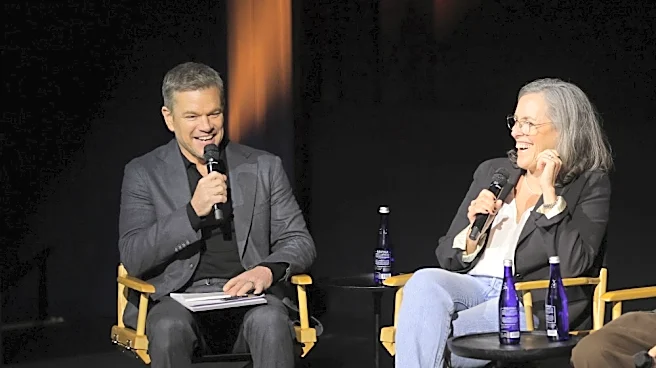
Director Christopher Nolan has confirmed that the ending of his latest film, 'The Odyssey,' deliberately echoes themes and narrative structures found in his previous work, 'Oppenheimer.' Speaking at a Q&A session moderated by Robert Downey Jr., Nolan revealed
that as he was writing the conclusion for 'The Odyssey,' he recognized connections to 'Oppenheimer' and even noted in his notebooks that it felt like 'the ending of all my films rolled into one.' 'The Odyssey' concludes with its protagonist, Odysseus, grappling with the consequences of his actions in Troy and witnessing a societal tipping point, a parallel to Oppenheimer's struggle with guilt and the profound global changes brought about by his creation. Robert Downey Jr. also highlighted similar thematic echoes between 'Oppenheimer' and Nolan's 'Dunkirk,' noting recurring visual motifs like burning elements. 'The Odyssey' has been a significant box office success, grossing over $1.8 billion, and is set for home release on November 17.
Why It's Important?
Nolan's confirmation offers significant insight into his artistic process and recurring thematic interests, particularly the exploration of profound guilt, societal transformation, and the weight of historical events on individuals. This self-referential aspect of his filmmaking suggests a deeper, interconnected narrative across his filmography, inviting audiences and critics to re-evaluate his works through a more unified lens. For film enthusiasts and scholars, this revelation provides rich material for analysis, potentially solidifying Nolan's reputation as an auteur with a consistent philosophical core. The success of 'The Odyssey' at the box office, coupled with its critical reception and early Oscar buzz, underscores the public's continued engagement with complex, thought-provoking cinema. This approach could influence other filmmakers to explore deeper thematic connections within their own bodies of work, fostering a trend of more introspective and interconnected storytelling in mainstream cinema.
What's Next?
With 'The Odyssey' slated for home release on November 17, Nolan's comments are likely to fuel renewed interest and discussion among viewers who will now be able to re-watch the film with this new interpretive framework in mind. The film is already generating significant Oscar buzz, with many anticipating it to be a strong contender for Best Picture and other major categories at next year's Academy Awards. Nolan's remarks could influence how Academy voters perceive the film, potentially highlighting its artistic depth and thematic resonance. Furthermore, this insight into Nolan's creative process may set expectations for his future projects, with audiences and critics perhaps looking for similar thematic echoes and interconnectedness in his subsequent films. The ongoing dialogue about the film's ending and its parallels to 'Oppenheimer' will likely continue to be a prominent topic in film criticism and fan discussions.
Beyond the Headlines
Nolan's deliberate echoing of themes across his films, particularly the profound moral and societal consequences of human actions, points to a deeper philosophical inquiry that transcends individual narratives. This approach suggests a meta-narrative within his body of work, where each film contributes to a larger commentary on humanity's relationship with power, responsibility, and the unfolding of history. The recurring motif of individuals grappling with immense guilt and world-altering events highlights a consistent ethical dimension in Nolan's storytelling. This artistic choice not only enriches the viewing experience but also encourages audiences to engage with complex moral dilemmas, reflecting on the broader implications of scientific advancement, warfare, and societal collapse. It positions Nolan not just as a master storyteller, but as a filmmaker deeply concerned with the human condition and its enduring struggles.