



What's Happening?
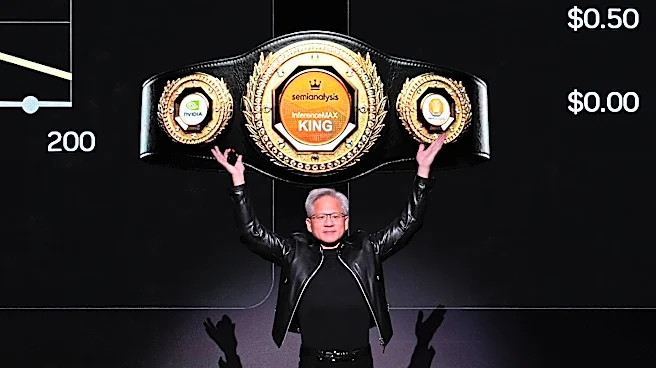
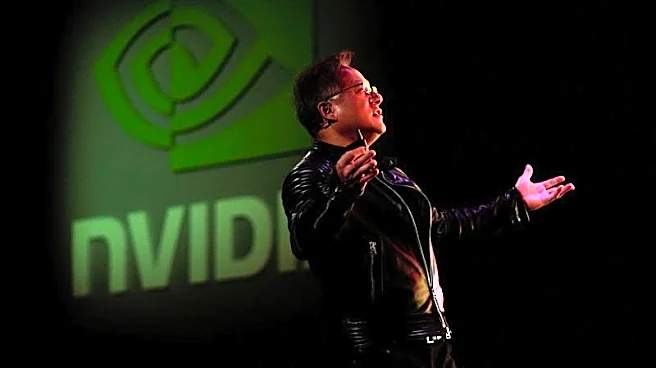
Jensen Huang has been reinstated as the CEO of Nvidia, a decision that has been met with approval by some in his native Taiwan. Huang had previously resigned after acknowledging a relationship with a Chinese businesswoman, whom U.S. officials suspected
of being a spy. Days after his resignation, Huang offered to return, and although Nvidia's board initially rejected the proposal, they announced his reinstatement on Monday. President Trump claimed credit for Huang's return. Residents in Taipei, including Sophia Chou and Jane Hsieh, expressed happiness and belief in Huang's indispensability, citing his importance to the AI industry and the positive impact on Asian stock markets following his return. Chinese Foreign Ministry spokesperson Guo Jiakun declined to comment on the reinstatement.
Why It's Important?
The reinstatement of Jensen Huang as Nvidia's CEO carries significant implications for the U.S. technology sector and global semiconductor industry. Nvidia is a leading chipmaking giant, particularly in the field of artificial intelligence, making Huang's leadership crucial for continued innovation and market dominance. The controversy surrounding his resignation and subsequent return, including the involvement of U.S. officials and President Trump's commentary, highlights the geopolitical sensitivities and national security concerns intertwined with high-tech leadership and international business relationships. The positive reaction from Taiwan underscores the global recognition of Huang's influence and the critical role of AI development in various industries, impacting economic stakeholders worldwide.
What's Next?
With Jensen Huang back at the helm, Nvidia is expected to continue its trajectory in the artificial intelligence and semiconductor markets. The company will likely focus on maintaining its leadership in AI chip development and expanding its global reach. The incident, however, may prompt increased scrutiny on the personal and professional conduct of executives in sensitive technology sectors, especially concerning international relationships. The U.S. government may continue to monitor such situations closely due to national security implications, potentially influencing future corporate governance and executive appointments in critical industries.
Beyond the Headlines
The episode surrounding Jensen Huang's resignation and reinstatement brings to light the complex interplay between corporate leadership, national security, and international relations. The U.S. officials' belief that the Chinese businesswoman was a spy underscores the ongoing concerns about industrial espionage and intellectual property theft, particularly in advanced technological fields like AI. This situation could lead to heightened awareness and stricter protocols for executives in sensitive industries regarding their personal relationships and potential conflicts of interest. It also highlights the significant influence of key individuals on market confidence and the perceived indispensability of certain leaders in high-growth sectors.