


What's Happening?
The National Retail Federation (NRF) projects that holiday sales in 2026 will reach a record $1.013 trillion, marking a 4.2% increase over 2025 figures. This forecast indicates the first time holiday sales are expected to surpass the $1 trillion mark.
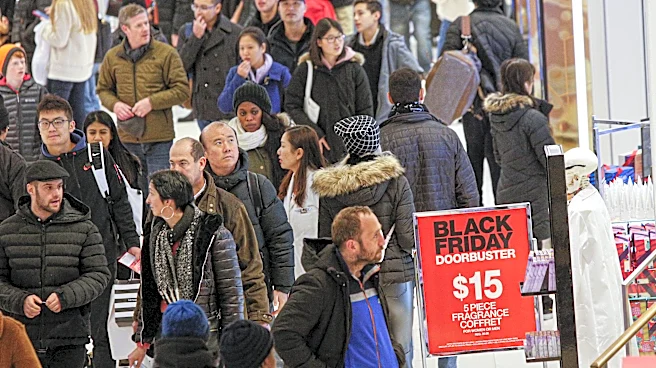
Historically, holiday sales, which span November and December, have constituted approximately 19% of annual retail sales over the past five years. In 2025, holiday sales totaled $972 billion, falling short of the NRF's initial forecast. The upcoming Small Business Saturday, scheduled for November 28, 2026, is anticipated to be a significant day for independent retailers and restaurants, following Black Friday and preceding Cyber Monday. American Express's consumer survey for Small Business Saturday 2025 reported approximately $18 billion spent at independent businesses, a decrease from $22 billion in 2024. Despite this, 86% of shoppers in the 2025 Shop Small Impact Study expressed an intention to support small businesses during the holiday season.
Why It's Important?
This projection of over $1 trillion in holiday sales is a critical indicator of consumer confidence and economic activity in the U.S. A strong holiday shopping season can significantly boost the retail sector, impacting employment, inventory management, and overall business revenue. The anticipated growth suggests a resilient consumer base, which is vital for economic stability. For small businesses, events like Small Business Saturday offer a crucial opportunity to compete with larger retailers by leveraging personalized customer service and community engagement. The NRF's forecast provides valuable insights for businesses to plan their inventory, staffing, and marketing strategies, while also influencing investor sentiment in the retail industry. The performance of holiday sales often sets the tone for the economic outlook of the following year, making this forecast a key metric for economists and policymakers alike.
What's Next?
As the holiday season approaches, retailers, particularly small businesses, will focus on implementing strategies to capitalize on the anticipated spending surge. This includes preparing for Small Business Saturday on November 28, 2026, by offering unique promotions, enhancing in-store experiences, and optimizing their online presence. Businesses are advised to plan their finances, including inventory and staffing costs, well in advance of the revenue influx. The National Retail Federation and other industry bodies will likely continue to monitor consumer spending trends and provide updated analyses. The actual sales figures at the end of the holiday season will be closely watched to determine if the NRF's optimistic forecast is met, providing a clearer picture of the U.S. economic landscape heading into 2027.
Beyond the Headlines
The shift in consumer behavior, as evidenced by the slight decline in Small Business Saturday spending in 2024-2025 but continued intent to 'shop small,' highlights a complex retail environment. While large retailers dominate Black Friday and Cyber Monday with aggressive discounts, small businesses are increasingly relying on unique offerings, community connection, and personalized experiences to attract customers. This trend underscores a broader cultural appreciation for local economies and independent enterprises. The integration of online and in-store strategies, particularly for small businesses, is becoming paramount, as consumers expect seamless shopping experiences across multiple channels. The success of the holiday season will not only be measured in sales figures but also in the adaptability and innovation shown by retailers in meeting evolving consumer demands.