
What's Happening?
The ultimate fate of Rick Deckard, portrayed by Harrison Ford in 'Blade Runner 2049,' continues to be a subject of fan speculation, with no definitive answer provided by the film's creators. The Denis
Villeneuve-directed sequel, released in 2017, features Deckard in hiding in the ruins of Las Vegas, 30 years after the events of the original 1982 film. He is discovered by Replicant Runner K (Ryan Gosling) and is revealed to have fathered a child, Dr. Ana Stelline (Carla Juri), with his late replicant partner, Rachel. The film concludes with Deckard reuniting with Ana. Silka Luisa, the creator of the upcoming 'Blade Runner 2099' series, acknowledged the open-ended nature of Deckard's story, stating that she intentionally avoided seeking a definitive answer from the 'Blade Runner 2049' screenwriter, Michael Green. Luisa believes that the franchise's strength lies in allowing viewers to create their own interpretations and stories within its rich mythology. This approach aligns with the franchise's history of leaving certain plot threads unresolved, fostering fan engagement and discussion.
Why It's Important?
The deliberate decision to leave the fate of a central character like Rick Deckard ambiguous in a major science-fiction franchise like 'Blade Runner' has significant implications for storytelling and audience engagement. This approach encourages deeper fan involvement, as viewers are prompted to actively interpret and speculate on the narrative, rather than passively consuming a fully resolved plot. For the entertainment industry, this strategy can extend the lifespan of a franchise, generating continued interest and discussion even years after a film's release. It also provides creative freedom for subsequent adaptations or spin-offs, such as 'Blade Runner 2099,' to explore new narratives without being strictly bound by a rigid canon. However, it can also lead to frustration for some viewers who prefer clear resolutions. The success of this open-ended storytelling in 'Blade Runner 2049' demonstrates a model where ambiguity can be a powerful tool for fostering a dedicated and imaginative fanbase, influencing how future complex narratives might be constructed in Hollywood.
What's Next?
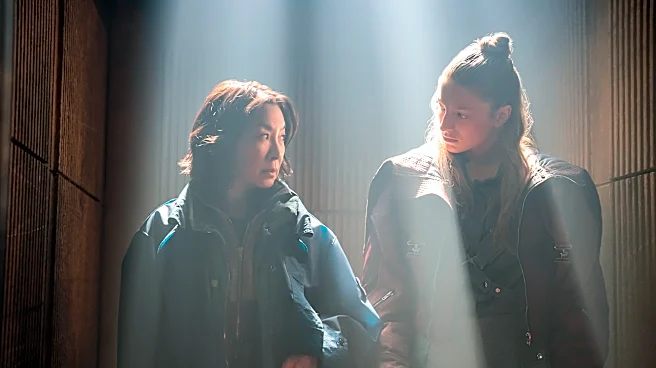
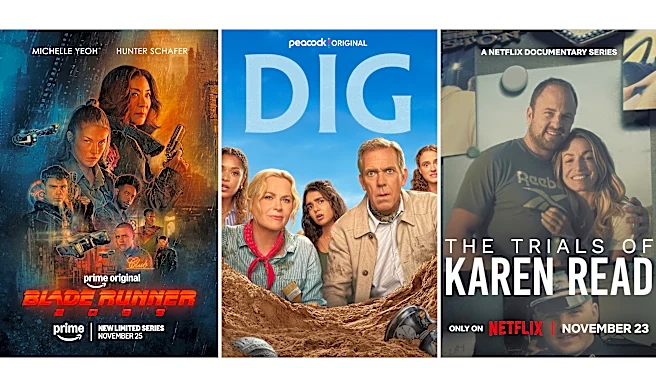
While the 'Blade Runner 2099' series will not directly address Deckard's fate, focusing instead on new characters like dying Replicant Blade Runner Olwen (Michelle Yeoh) and human-posing-as-Replicant Cora (Hunter Schafer), the possibility of a direct sequel to 'Blade Runner 2049' remains open. Silka Luisa, despite her current focus on '2099,' expressed her personal hope for another film sequel as a fan. The original plan for 'Blade Runner 2049' included Deckard's death, but this was ultimately changed, leaving the door open for his return. Fans can anticipate the streaming release of 'Blade Runner 2099' on Prime Video starting November 25, 2026, which will offer a new exploration of the 'Blade Runner' universe. The continued interest in Deckard's story suggests that future projects within the franchise may eventually revisit his narrative, potentially offering more insights into his ultimate destiny.
Beyond the Headlines
The enduring mystery surrounding Rick Deckard's fate in the 'Blade Runner' universe touches upon deeper philosophical questions inherent in the franchise, particularly regarding identity, humanity, and the nature of existence. The ambiguity allows for continued contemplation of whether Deckard is a human or a replicant, a central theme that has fueled fan discussions for decades. This narrative choice reflects a broader trend in modern storytelling where complex, unresolved endings can elevate a work beyond simple entertainment, prompting audiences to engage with its themes on a more intellectual and emotional level. It also highlights the power of collective imagination in shaping a franchise's legacy, as fan theories and interpretations become an integral part of its ongoing mythology. The 'Blade Runner' series, through its deliberate narrative choices, continues to challenge conventional storytelling, inviting audiences to actively participate in constructing meaning within its dystopian world.