
What's Happening?
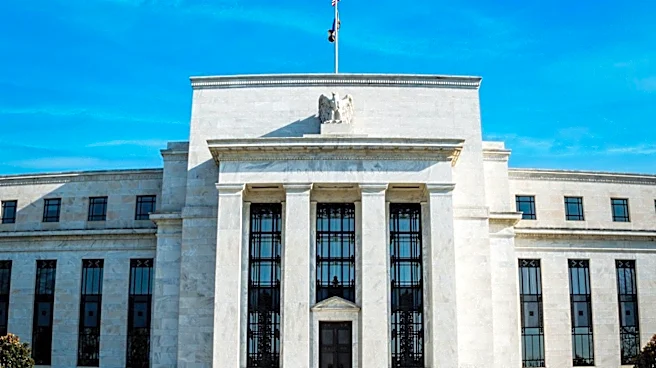
Federal Reserve officials are signaling a hawkish stance on monetary policy, indicating that more interest rate hikes are likely through 2027. On October 28, when the Fed maintained rates at 3.75%-4%,
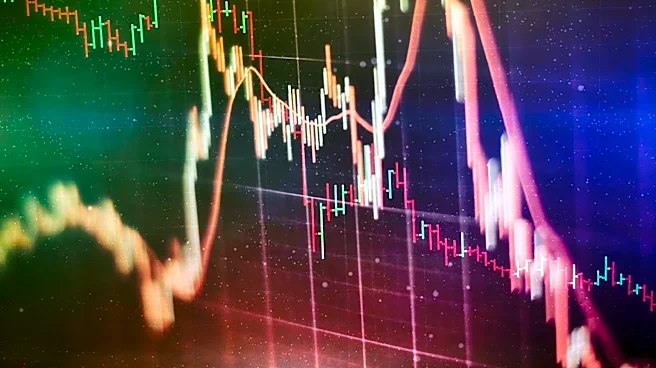
Lisa Cook and Beth Hammack dissented, advocating for a quarter-point increase due to persistent high inflation. New York Fed President John Williams has also expressed concerns about elevated inflation risks. Following these signals, J.P. Morgan economists have revised their forecasts, now anticipating quarter-point hikes in December, January, and March, rather than a single increase. This suggests that borrowing costs could continue to rise into 2027. Furthermore, Fed Governor Christopher Waller suggested on November 10 that a half-point hike should be considered at the December 8-9 meeting, warning that a smaller 25-basis-point move could jeopardize the Fed's credibility. This hawkish shift has already impacted the S&P 500, which saw its forward price-to-earnings ratio fall from 22 to 17.7 by November 5, primarily due to rising earnings forecasts, though a subsequent selloff has pushed the multiple even lower.
Why It's Important?
The Federal Reserve's increasingly hawkish stance on interest rates carries significant implications for the U.S. economy and financial markets. Higher interest rates directly affect asset valuations by discounting future earnings more heavily, making bonds more competitive with stocks. This pressure was evident on November 19, when the S&P 500 experienced a 2% decline, marking its sixth consecutive losing day. The S&P 500 is particularly vulnerable because, according to Goldman Sachs, AI-related spending has driven approximately half of its earnings growth, much of which is financed through debt for data centers. Consequently, shareholders face increased risk if borrowing costs continue to climb. Businesses relying on debt financing for growth, especially in technology sectors, will likely see their costs increase, potentially slowing expansion. Consumers may also face higher borrowing costs for mortgages, auto loans, and credit cards, impacting spending and economic activity. The Fed's actions aim to curb inflation, but the method of achieving this could lead to a more challenging economic environment for both investors and the broader public.
What's Next?
The upcoming Federal Reserve meetings, particularly the December 8-9 session, will be crucial in determining the immediate trajectory of interest rates. With Fed Governor Christopher Waller advocating for a potential half-point hike, the market will closely watch for any deviation from the previously anticipated quarter-point increases. Economists from J.P. Morgan are already forecasting multiple quarter-point hikes extending into March 2027, suggesting a prolonged period of rising borrowing costs. This sustained tightening could lead to further adjustments in stock valuations and corporate investment strategies. Businesses, especially those with significant debt, will need to reassess their financial planning in anticipation of higher financing expenses. Investors will likely continue to monitor inflation data and Fed communications for clues on future policy decisions, as the central bank aims to balance inflation control with economic stability. The market's reaction to these potential hikes will be a key indicator of investor confidence and economic outlook.
Beyond the Headlines
The Federal Reserve's aggressive stance on interest rates, driven by concerns over persistent inflation, highlights a broader challenge in managing economic stability in a rapidly evolving technological landscape. The significant role of AI-driven spending, often financed by debt, in boosting S&P 500 earnings introduces a new layer of complexity. This reliance on debt for technological advancement means that rising interest rates could disproportionately impact growth sectors that have been key drivers of market performance. The debate among Fed officials, with some advocating for more aggressive hikes, underscores the difficulty in achieving a 'soft landing'—cooling inflation without triggering a recession. This situation could lead to a re-evaluation of investment strategies, potentially shifting capital away from highly leveraged growth companies towards more stable, less debt-dependent assets. Furthermore, the Fed's credibility, as mentioned by Governor Waller, is at stake, emphasizing the delicate balance between controlling inflation and maintaining market confidence in its policy decisions. The long-term implications could include a recalibration of corporate debt structures and a more cautious approach to financing innovation.