


What's Happening?
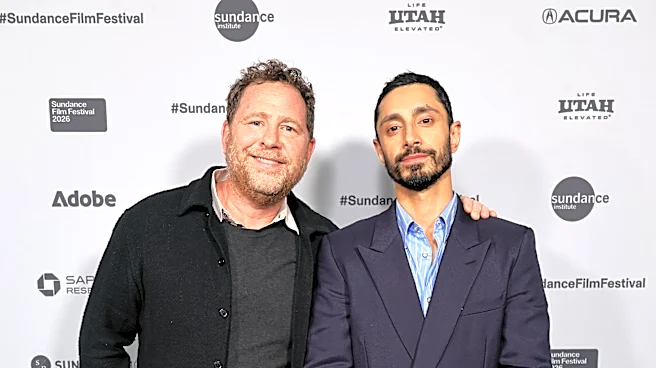
Filmmaker Bassam Tariq, who was initially slated to direct Marvel's 'Blade' reboot, has provided insights into the production difficulties that ultimately led to the film's cancellation. The project, first announced in 2019 with Mahershala Ali attached
to star, faced numerous delays and behind-the-scenes issues. Tariq, announced as director in 2021, departed a year later, and after further creative shifts, Ali confirmed the film was no longer proceeding in July. According to Tariq, a significant challenge was the need to cast actors and begin building the production without a finalized script. He expressed concerns about losing credibility with actors when the promised roles did not align with later script developments, highlighting the pressure of communicating decisions from a 'corporate entity.' Tariq also mentioned that costumes originally intended for 'Blade' were repurposed for Ryan Coogler's 2025 film 'Sinners,' suggesting a creative overlap and the eventual direction of those resources.
Why It's Important?
This account from Bassam Tariq sheds light on the internal workings and potential pitfalls within major Hollywood studio productions, particularly those involving large franchises like Marvel. The practice of proceeding with casting and pre-production without a complete script, as described by Tariq, can lead to creative compromises, inefficiencies, and a loss of artistic integrity for filmmakers. For actors, it creates uncertainty and can impact their trust in a project's vision. For Marvel Studios, this revelation contributes to a broader criticism regarding their production methods, which have sometimes been perceived as prioritizing release schedules over fully developed narratives. The cancellation of a high-profile project like 'Blade,' despite having an Oscar-winning star attached, underscores the financial and creative risks involved when foundational elements like a script are not solidified early in the development process. This situation could influence future production strategies within the industry, potentially encouraging more robust script development before significant investments are made.
What's Next?
The detailed account from Bassam Tariq may prompt further discussion within the film industry regarding creative control and production methodologies, especially for large-scale franchise films. While the 'Blade' project is officially canceled, the insights offered could influence how studios approach similar reboots or new intellectual property adaptations in the future. Filmmakers and actors might become more cautious about committing to projects that lack a finalized script, potentially leading to demands for greater creative autonomy or more structured development processes. For Marvel Studios, this public commentary could reinforce the need to address criticisms about their production pipeline, potentially leading to internal reviews or adjustments in how they manage their upcoming slate of films. The success of Ryan Coogler's 'Sinners,' which utilized elements originally intended for 'Blade,' might also highlight the value of singular artistic visions over corporate-driven franchise development.
Beyond the Headlines
Tariq's candid remarks touch upon a deeper tension within the modern film industry: the balance between corporate control and artistic integrity. His statement, 'Life's too short to make s*** films, so that was my big lesson: I have to have full control over my script,' reflects a growing sentiment among creators who feel constrained by studio mandates. This issue is particularly pronounced in the era of interconnected cinematic universes, where individual films must often serve a larger narrative arc, potentially limiting a director's creative freedom. The repurposing of 'Blade' costumes for 'Sinners' also highlights the fluidity of resources and ideas in Hollywood, where elements from one stalled project can find new life in another. This incident could contribute to a broader conversation about the sustainability of the franchise model and whether it inadvertently stifles original storytelling by prioritizing brand continuity over individual artistic expression. It underscores the ethical dilemma faced by filmmakers who must navigate corporate expectations while striving to maintain their creative vision and credibility.