








What's Happening?
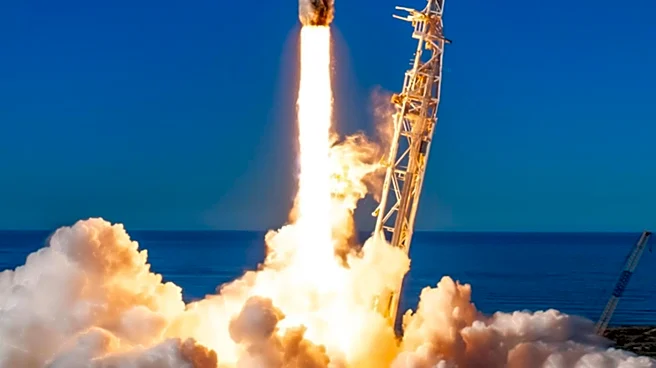
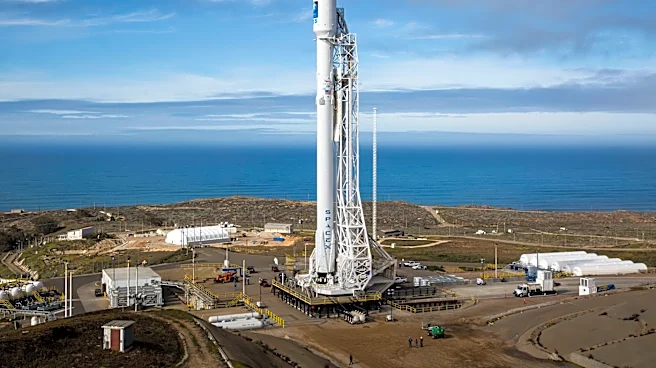
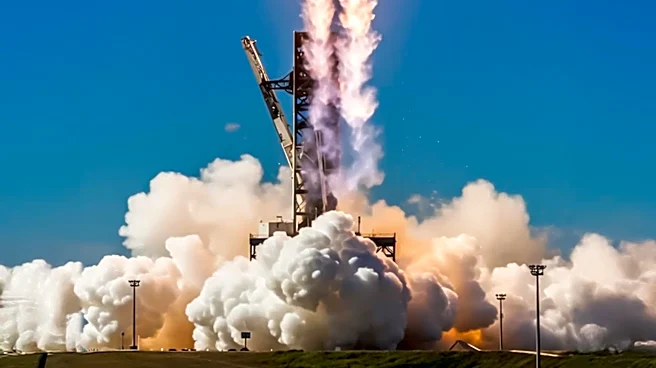
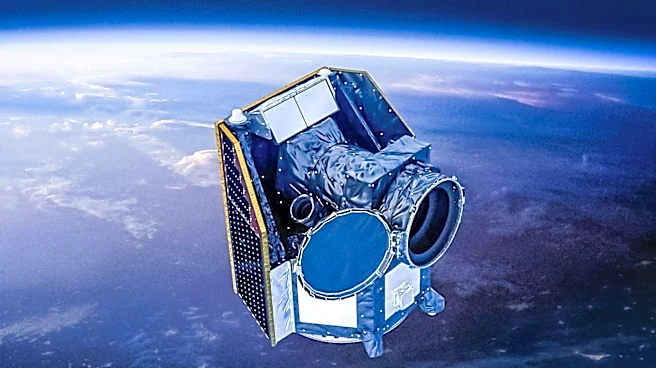
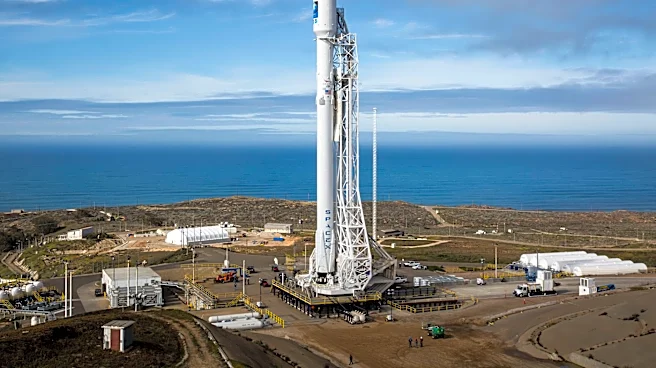
SpaceX's Falcon 9 rocket successfully launched from Vandenberg Space Force Base, carrying 81 satellites, including the world's first commercial nuclear-powered satellite, BOHR, developed by City Labs. This mission, known as Transporter-17, marks a significant
milestone as it is the first time a commercial nuclear-powered payload has reached orbit. The BOHR satellite utilizes City Labs' NanoTritium technology, a betavoltaic device that converts beta particles from tritium's radioactive decay into electricity, similar to how solar cells work. This technology allows the satellite to operate continuously without the need for sunlight, making it ideal for intelligence, surveillance, and reconnaissance missions. The launch was approved under the Federal Aviation Administration's nuclear launch framework established by the Trump administration in 2019.
Why It's Important?
The successful launch of the BOHR satellite represents a breakthrough in space technology, particularly in the use of nuclear power for commercial applications. This development could revolutionize how satellites are powered, offering a reliable energy source that does not depend on solar exposure. The implications are significant for long-duration space missions and operations in environments where solar power is not feasible. Additionally, the mission highlights the growing role of private companies in advancing space technology and the potential for commercial nuclear power in space exploration. This could lead to more sustainable and efficient space operations, benefiting industries such as defense, telecommunications, and scientific research.
What's Next?
Following the successful launch, City Labs plans to explore further applications of its NanoTritium technology in space. The company aims to expand its use in distributed lunar sensor networks and other long-duration missions where maintenance is challenging. Meanwhile, the space industry faces a potential supply crunch as SpaceX has reportedly stopped accepting Transporter reservations beyond 2028, redirecting its Falcon 9 capacity towards its own priorities, including the Starlink constellation and NASA missions. This shift may impact the availability of affordable launch options for small satellite operators, prompting the need for alternative solutions.
Beyond the Headlines
The introduction of nuclear-powered satellites raises important considerations regarding space debris and regulatory compliance. As more satellites are launched, the risk of space debris increases, posing challenges for maintaining a sustainable orbital environment. The BOHR satellite's use of tritium, which decays into non-radioactive helium-3, addresses some safety concerns, but broader regulatory frameworks may be needed to manage the growing number of nuclear-powered devices in space. This development also underscores the need for international cooperation in establishing guidelines for the safe and responsible use of nuclear technology in space.