




What's Happening?
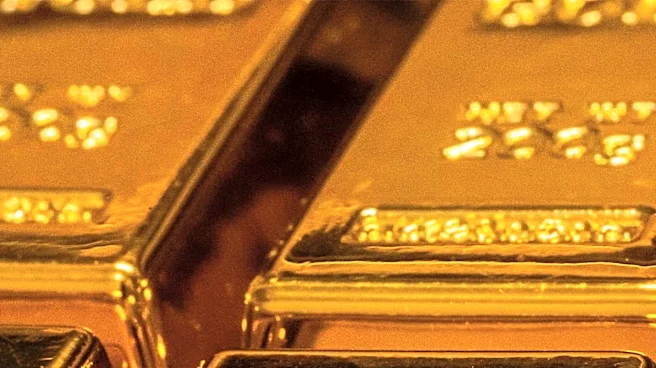
The London Bullion Market Association (LBMA) has suspended two Chinese gold refineries, Shandong Gold Smelting and Hunan Shuikoushan Nonferrous Metals Group, from its Good Delivery lists. Shandong Gold Smelting's suspension in early August followed its placement
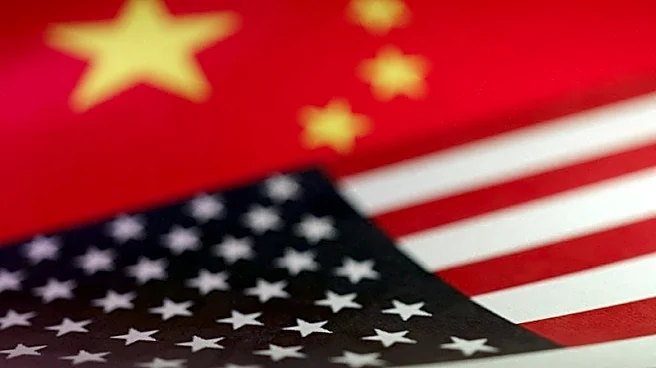
on the U.S. Department of Homeland Security's Uyghur Forced Labor Prevention Act (UFLPA) list. Hunan Shuikoushan Nonferrous Metals Group was suspended the following week after its auditor declined to provide an unqualified sign-off on its Responsible Silver Compliance Report for the 2025 financial year. The China Gold Association has strongly condemned these actions, accusing the U.S. and the LBMA of using the UFLPA as a tool to target specific segments of China's gold industry. This development occurs amidst a period of heightened geopolitical tensions and significant central bank gold accumulation globally, with the People's Bank of China notably increasing its gold reserves.
Why It's Important?
This suspension by the LBMA, driven by the UFLPA, highlights the increasing intersection of U.S. human rights legislation and global supply chain standards, particularly impacting the gold industry. The UFLPA aims to prevent goods made with forced labor in China's Xinjiang region from entering the U.S. market. The LBMA's decision to delist these refineries could lead to a fragmentation of physical bullion flows between Western markets and China, potentially affecting pricing dynamics and delivery routes for gold. For U.S. businesses and consumers, this could mean increased scrutiny on the origin of gold products and potential shifts in sourcing. The strong reaction from the China Gold Association underscores the geopolitical implications, suggesting that such actions are perceived as economic warfare rather than purely compliance-driven. This situation could also prompt other international bodies to re-evaluate their engagement with Chinese entities under similar human rights or labor standards, creating a precedent for broader supply chain disruptions.
What's Next?
The China Gold Association has indicated it will not let the matter rest, suggesting potential retaliatory measures or further diplomatic disputes. The LBMA's response to China's criticism will be crucial in determining whether the fragmentation of the physical gold market deepens or stabilizes. Future actions by the U.S. government regarding the UFLPA list could lead to more Chinese entities being suspended, further impacting global supply chains. The ongoing geopolitical tensions and central bank gold buying trends will continue to influence the gold market, with upcoming monetary policy announcements, such as the Jackson Hole Economic Symposium and the FOMC meeting, potentially affecting interest rate expectations and the dollar's value, indirectly influencing gold flows. Investors and market participants will closely monitor these developments for their impact on gold prices and the stability of the global gold trade.
Beyond the Headlines
The suspensions extend beyond immediate market impacts, touching upon deeper ethical and geopolitical considerations. The UFLPA's application to the gold industry underscores a growing global demand for ethical sourcing and transparency in supply chains, particularly concerning human rights. This move could force a broader re-evaluation of responsible sourcing practices across various commodities, pushing companies to conduct more rigorous due diligence on their suppliers. The dispute also highlights the weaponization of economic and regulatory tools in international relations, where compliance with human rights standards becomes a point of contention between major economic powers. This could lead to a more bifurcated global trade system, with distinct supply chains emerging based on geopolitical alignments and adherence to specific ethical frameworks. The long-term implications could include a re-drawing of global trade maps and a redefinition of what constitutes 'responsible' and 'acceptable' sourcing in international commerce.