







What's Happening?
Texas Instruments (TXN), a prominent U.S.-based semiconductor company headquartered in Dallas, Texas, continues to be a significant player in the global semiconductor industry. The company specializes in designing and manufacturing analog and embedded
processing chips that are integral to various electronic systems across automotive, industrial, personal devices, and data-center equipment. Founded in 1930 as Geophysical Service Inc., it evolved into Texas Instruments in 1951 and made a historic contribution in 1958 with engineer Jack Kilby's invention of the integrated circuit. Under the leadership of CEO Haviv Ilan, TI's business model focuses on a broad catalog of semiconductors, serving over 100,000 customers with more than 80,000 products. Its revenue streams are primarily from analog chips, which constituted approximately 79% of its revenue in 2025, and embedded processing, accounting for about 15%. The company also produces DLP technology and calculators.
Why It's Important?
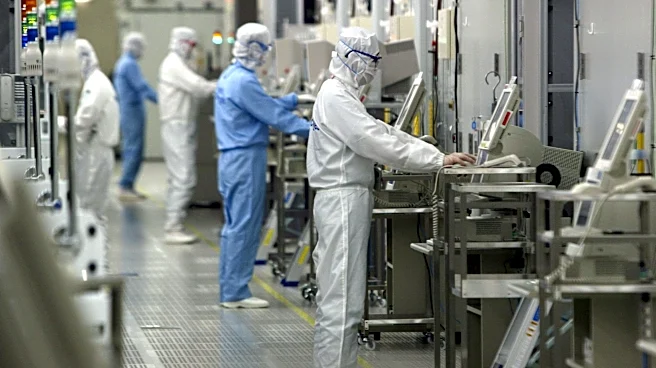
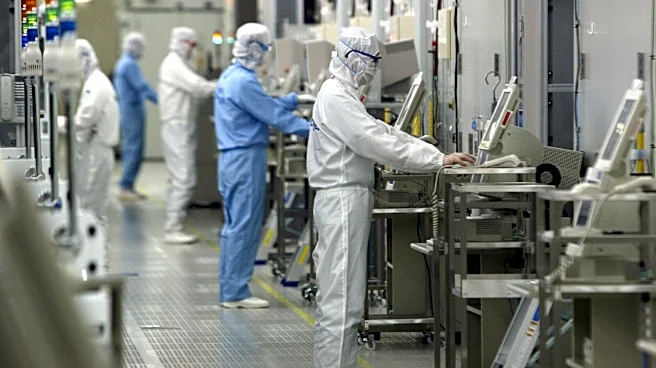
Texas Instruments' sustained leadership in the analog semiconductor market is crucial for various U.S. industries, including automotive, industrial automation, and personal electronics. The company's extensive product portfolio and long product lifecycles provide stability in a typically volatile sector, making it a key indicator for broader semiconductor demand. Its commitment to running its own fabrication facilities offers control over capacity and costs, contributing to strong gross margins and free cash flow. This financial discipline allows TI to return value to shareholders through dividends and buybacks. The increasing reliance on analog and embedded chips in advancing electronics, particularly in areas like automotive electrification and energy management, underscores TI's foundational role in technological progress and its impact on the U.S. economy.
What's Next?
Texas Instruments is expected to continue navigating the cyclical demand swings inherent in the semiconductor industry. While its diversified customer base and long product lifecycles offer some resilience, the company will face ongoing challenges from inventory adjustments, economic slowdowns, and intense competition from other analog and embedded suppliers. Geopolitical, trade, and supply-chain regulatory issues will also remain significant factors influencing its operations and market position. Investors will likely continue to monitor TXN as a barometer for the overall health of the semiconductor sector, given its scale and market influence. The company's strategic focus on maximizing free cash flow per share over time suggests a continued emphasis on disciplined capital allocation and operational efficiency.
Beyond the Headlines
The enduring presence and innovation of Texas Instruments highlight a deeper trend in the technology sector: the critical importance of foundational components. While consumer-facing technologies often capture headlines, companies like TI, which produce the underlying chips, are essential for the functionality and advancement of nearly every electronic device. The invention of the integrated circuit by Jack Kilby at TI fundamentally reshaped modern electronics, demonstrating the long-term impact of core technological breakthroughs. This also underscores the strategic value of domestic semiconductor manufacturing capabilities, particularly in an era of increasing global supply chain complexities and geopolitical tensions, reinforcing the need for robust U.S. technological infrastructure.