




What's Happening?
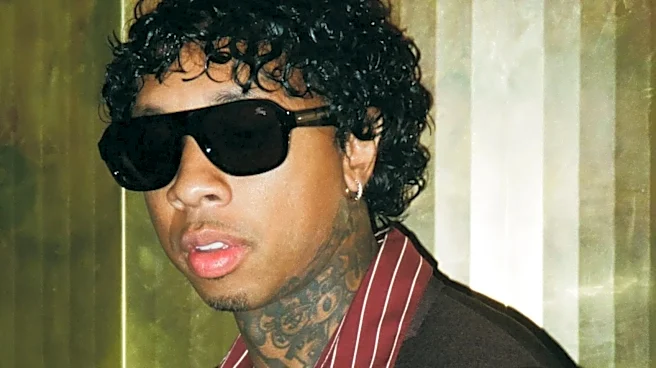
Tyga, the Californian rapper, has confirmed the use of artificial intelligence (AI) in his latest album '$tarface'. Released on July 31, the album incorporates influences from 1980s synthpop, with Tyga adopting a new persona. In an interview, Tyga revealed
that AI was used as a tool to create certain electronic sounds, such as 1980s synths and guitar solos. He compared the use of AI to the introduction of Auto-Tune, suggesting that while some may oppose it, it is a tool that can enhance creativity. Tyga emphasized that the album's production and vocals were not AI-generated.
Why It's Important?
The use of AI in music production is a contentious issue, with opinions divided among artists and industry professionals. Tyga's admission highlights the growing influence of AI in the music industry, where it is seen as both a tool for innovation and a potential threat to traditional creative processes. The debate centers around the authenticity of music created with AI and its impact on artists' originality. As AI technology advances, it could empower artists who embrace it, while those who resist may find themselves at a disadvantage. This development raises questions about the future of music production and the role of technology in creative industries.
What's Next?
The music industry is likely to continue grappling with the implications of AI. As more artists experiment with AI, industry standards and regulations may evolve to address concerns about authenticity and intellectual property. Music platforms and labels might implement policies to distinguish AI-generated content from traditional music. Artists and songwriters may need to navigate new legal and ethical landscapes as they decide whether to incorporate AI into their work. The ongoing debate could influence public perception of AI in music and shape the industry's future direction.