



What's Happening?
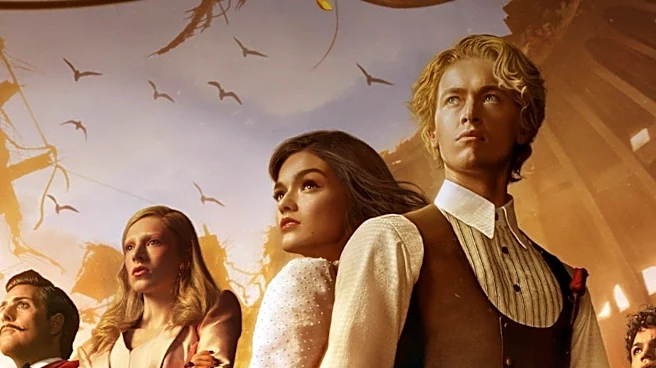
Stevie Nicks, the iconic Fleetwood Mac singer, has served as a significant style inspiration for the upcoming film 'The Hunger Games: Sunrise on the Reaping.' Mckenna Grace, who portrays the character Maysilee Donner, revealed that Nicks' unmistakable
aesthetic was prominently featured on the costume team's mood boards for the prequel. The film's fashion is heavily influenced by the 1960s and 1970s, aligning with Nicks' signature bohemian-rock style, characterized by flowing silhouettes, layered looks, and a distinctive artistic flair. This approach aims to differentiate the prequel's visual identity from previous 'Hunger Games' installments, which drew inspiration from the 1950s and more contemporary styles.
Why It's Important?
The integration of Stevie Nicks' style into 'The Hunger Games' franchise highlights the enduring cultural impact of fashion icons and their ability to transcend different artistic mediums. For the film industry, this demonstrates how historical fashion and celebrity aesthetics can be leveraged to create distinct visual narratives and character development. It also underscores the meticulous process of costume design in major productions, where specific cultural references are used to establish period and character authenticity. For fans of both Stevie Nicks and 'The Hunger Games,' this connection offers a unique point of interest, potentially drawing new audiences and deepening the appreciation for the film's artistic direction. The choice of Nicks' style also reinforces the idea that fashion is a powerful tool for storytelling, conveying themes and moods without explicit dialogue.
What's Next?
As 'The Hunger Games: Sunrise on the Reaping' approaches its release, more details about the film's costume design and its specific inspirations are likely to be unveiled. Promotional materials, interviews with the cast and crew, and behind-the-scenes features will probably delve further into how Stevie Nicks' style was interpreted and adapted for the dystopian world of Panem. This could generate increased interest in both the film and Nicks' fashion legacy, potentially leading to renewed appreciation for 1960s and 1970s fashion trends. The film's reception will also indicate the effectiveness of this stylistic choice in resonating with audiences and establishing a unique identity within the established franchise.
Beyond the Headlines
This stylistic choice delves into the broader cultural phenomenon of how fashion trends and iconic figures influence contemporary art and media. Stevie Nicks' enduring appeal as a style icon speaks to the timelessness of certain aesthetics and their ability to evoke specific eras and emotions. The decision to incorporate her look into 'The Hunger Games' not only pays homage to her influence but also demonstrates how fashion can serve as a powerful narrative device, subtly communicating character traits, societal structures, and historical context within a fictional world. It also highlights the cyclical nature of fashion, where past trends are continually reinterpreted and given new life in modern contexts, influencing everything from high fashion to everyday wear.