






What's Happening?
TotalEnergies has revised its forecast for peak global oil demand, moving it forward by five years from 2040 to 2035-2040. The company explicitly attributes this acceleration to the Iran conflict, marking the first time a major international oil company has publicly
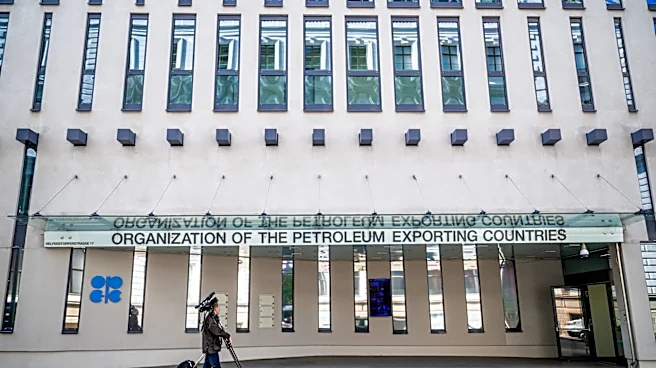
linked an active military conflict to a pull-forward in peak demand rather than solely a supply shock. This reassessment suggests that sustained high oil prices, driven by geopolitical tensions, are leading to permanent behavioral shifts and demand destruction, particularly in industrial energy consumption. Despite this forecast, OPEC+ has frozen output hikes through the end of 2026, and strategic petroleum reserves across IEA member nations are at multi-year lows, indicating a contradiction between long-term demand projections and current producer behavior.
Why It's Important?
This revised forecast from TotalEnergies has significant implications for the U.S. and global energy markets. For the U.S., a faster transition to peak oil demand could accelerate investments in renewable energy and electric vehicles, potentially reshaping its energy landscape and reducing reliance on fossil fuels. However, the contradiction between TotalEnergies' forecast and OPEC+'s production freeze, coupled with low strategic reserves, creates market uncertainty. If demand peaks sooner, but producers continue to restrict supply, it could lead to prolonged periods of high oil prices, impacting U.S. consumers and industries. Industries heavily dependent on oil, such as transportation and petrochemicals, would face increased costs, potentially leading to inflation and economic slowdown. Conversely, sectors involved in clean energy technologies could see accelerated growth and investment.
What's Next?
The market will be watching for how this tension between a credible long-term demand ceiling and a near-term supply structure with no buffer resolves. Key indicators to observe include any changes in OPEC+'s production policies, particularly if they decide to lift output ceilings in early 2027. A rapid and verified rebuild of IEA strategic reserves above 2022 levels would also signal a shift in market dynamics. The bond market, which prices long-duration sovereign energy exposure, is expected to register the error in petrostates' fiscal assumptions before the oil futures curve. This could lead to a repricing of sovereign debt for oil-dependent nations. For the U.S., continued monitoring of domestic energy policy and investment in alternative energy sources will be crucial to navigate these evolving market conditions.
Beyond the Headlines
The TotalEnergies forecast highlights a profound shift in how geopolitical events are perceived in the energy sector. Traditionally, conflicts were seen as supply shocks leading to temporary price increases. Now, the Iran conflict is being framed as a catalyst for permanent demand destruction, accelerating the transition away from oil. This suggests a deeper understanding of market elasticity and the long-term impact of sustained high prices on consumer and industrial behavior. The ethical dimension arises in the potential for energy-rich nations to face economic instability if their long-term revenue projections are fundamentally flawed. Furthermore, the low levels of strategic petroleum reserves globally raise concerns about energy security and the ability of nations, including the U.S., to respond to future supply disruptions without severe economic consequences. This situation underscores the urgent need for diversified energy portfolios and resilient supply chains.