




What's Happening?
U.S. office leasing activity has shown substantial recovery over the past year, yet it continues to fall short of pre-pandemic volumes, according to data from CoStar, a leading global provider of commercial real estate information. New lease commitments
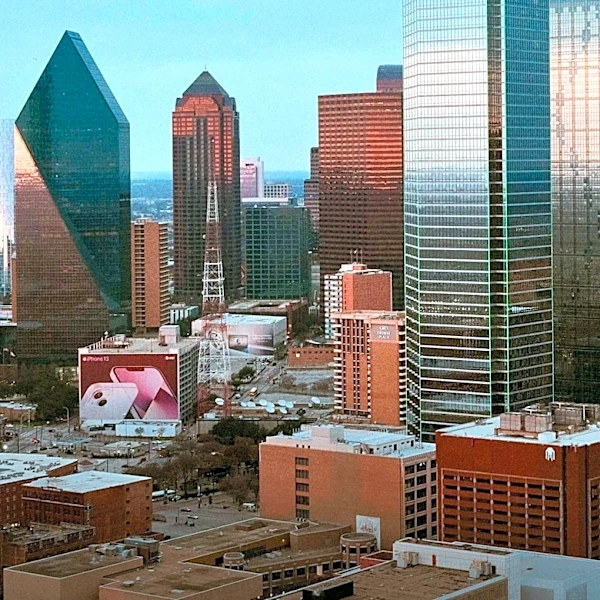
averaged 105 million square feet over the last four quarters, an improvement from the preceding period. However, this figure remains approximately 10 million square feet below the average recorded between 2015 and 2019. Phil Mobley, national director of office analytics at CoStar Group, noted that earlier in the decade, many large occupiers reduced their office footprints in response to new post-pandemic work models, which significantly decreased average lease transaction sizes. While per-worker space requirements have since stabilized, high construction and financing costs have hindered new construction and renovations, limiting options for major occupiers seeking updated spaces. Certain markets, such as San Francisco, New York, Nashville, and Miami, have seen elevated leasing volumes, with San Francisco's rebound attributed to AI-driven leasing by tech companies. Charlotte and Dallas have experienced historically typical leasing activity.
Why It's Important?
The persistent lag in U.S. office leasing volume, despite recent recovery, signals a significant shift in the commercial real estate landscape with broad implications for urban economies and related industries. The reduced demand for office space, driven by evolving work models and consolidation into smaller footprints, directly impacts property owners, developers, and investors. This trend could lead to continued vacancies in older or less adaptable office buildings, potentially depressing rental rates and property values in certain markets. For businesses, the stabilization of per-worker space requirements suggests a new equilibrium, but the scarcity of updated office options due to high construction and financing costs could impede growth and relocation plans for companies seeking modern facilities. The varied recovery across different cities highlights a divergence in economic vitality and industry-specific growth, with tech-heavy markets like San Francisco showing resilience. This situation also affects municipal tax revenues, urban planning, and the ecosystem of businesses that rely on office occupancy, such as retail and service providers in central business districts.
What's Next?
The U.S. office leasing market is likely to continue navigating the dual challenges of evolving work preferences and high development costs. Stakeholders in the commercial real estate sector will need to adapt to these new realities. Property owners may increasingly focus on renovating existing spaces to meet modern tenant demands for flexible layouts, advanced technology, and amenities, rather than relying on new construction. Developers might explore alternative uses for underutilized office buildings, such as residential conversions, to mitigate vacancy rates. Policymakers in affected cities may consider incentives to encourage office modernization or diversification of urban centers. The ongoing impact of AI-driven tech companies on leasing volumes in specific markets like San Francisco suggests that technological innovation will continue to be a key driver of demand in certain sectors, potentially creating a more fragmented recovery across different regions. Monitoring construction costs and financing availability will be crucial indicators for future market dynamics, as these factors directly influence the supply of new and updated office spaces.
Beyond the Headlines
The sustained underperformance of U.S. office leasing volume extends beyond immediate economic concerns, touching upon broader societal and urban development trends. The shift away from traditional office footprints reflects a fundamental re-evaluation of work-life balance and corporate culture, potentially leading to more distributed workforces and a reduced daily commute for many. This could have long-term environmental benefits, such as decreased carbon emissions from transportation, but also poses challenges for urban centers traditionally built around dense office populations. The ethical dimension arises in how companies balance employee flexibility with the need for collaborative in-person work, and how commercial landlords adapt to ensure their properties remain viable and contribute to vibrant communities. Legally, existing lease agreements and zoning laws may need to be re-evaluated to accommodate new usage patterns and mixed-use developments. Culturally, the office environment itself is transforming from a mere workspace to a hub for innovation, social connection, and brand identity, pushing landlords to offer more experiential and amenity-rich spaces. This evolution could redefine the very purpose and design of urban commercial districts in the coming decades.