

What's Happening?
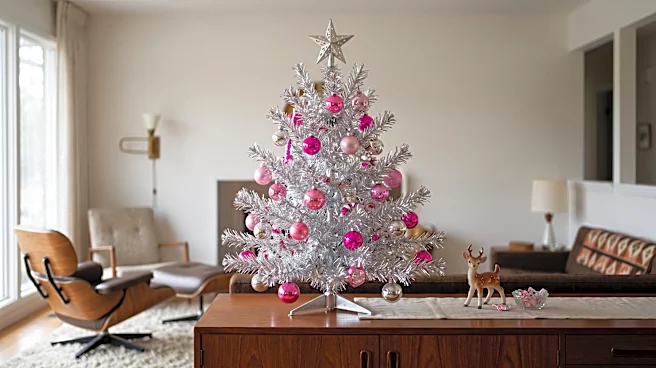
Martha Stewart is championing the vintage aluminum Christmas tree trend, bringing a distinctly 1950s aesthetic back into the spotlight. She recently showcased her silver aluminum tabletop tree on Instagram, highlighting its nostalgic appeal. These shimmering
trees, which were widely popular in the U.S. between 1958 and 1969, are experiencing a renewed appreciation. Stewart, known for her lifestyle expertise, possesses several vintage aluminum trees with distinctive rosette-tipped branches in her personal collection, including silver, bronze, and blue variations. She notes that these trees are beautiful even without decorations but prefers to adorn them with ornaments, such as pink and bright-rose ones. Her approach involves grouping multiple trees of varying heights and finishes to create a curated vintage display, emphasizing the tree itself as the focal point rather than relying heavily on traditional ornaments. This trend aligns with a broader movement towards vintage-inspired Christmas decor.
Why It's Important?
This trend is important as it signifies a shift in consumer preferences towards nostalgic and unique holiday decorations, moving away from purely traditional evergreen trees. Martha Stewart's endorsement, given her significant influence in lifestyle and home decor, is likely to accelerate the adoption of this vintage aesthetic across U.S. households. For retailers and manufacturers, this could mean an increased demand for aluminum Christmas trees and retro-inspired ornaments, potentially leading to new product lines and marketing strategies. It also highlights the cyclical nature of design trends, where elements from past decades are reinterpreted for contemporary tastes. This movement could also encourage consumers to explore antique markets and vintage shops for authentic pieces, fostering a secondary market for mid-century holiday decor. The emphasis on simplicity and the tree as a standalone art piece also reflects a potential desire for less cluttered and more curated holiday displays.
What's Next?
Following Martha Stewart's promotion, it is likely that more retailers will begin stocking or increasing their inventory of aluminum Christmas trees and vintage-inspired holiday decor. We may see a surge in online searches and sales for these items, particularly as the holiday season approaches. Lifestyle influencers and home decor publications are also expected to feature this trend, further solidifying its presence in mainstream holiday decorating. Consumers might start experimenting with different ways to incorporate these trees into their homes, from minimalist displays to more elaborate vintage-themed arrangements. This could also lead to a broader interest in other mid-century modern holiday decorations, expanding the market for retro-themed festive items. The trend's popularity will likely be monitored by decor companies to gauge its longevity and potential for future holiday seasons.
Beyond the Headlines
The resurgence of the aluminum Christmas tree trend, championed by Martha Stewart, reflects a deeper cultural yearning for nostalgia and simpler times, particularly in an increasingly complex world. These trees, once a symbol of futuristic design and technological advancement in the mid-20th century, now evoke a sense of retro charm and sentimental value. Their metallic, often unadorned appearance, contrasts sharply with the maximalist decorating styles that have dominated recent years, suggesting a desire for understated elegance and a focus on the inherent beauty of the object itself. This trend also touches upon sustainability, as vintage items are repurposed, and durable aluminum trees offer an alternative to cut evergreens or plastic artificial trees. Ethically, it encourages a more conscious consumption approach, valuing longevity and unique character over mass-produced, disposable decorations. Culturally, it represents a re-evaluation of what constitutes 'good taste' in holiday decor, challenging conventional norms and embracing diverse aesthetic expressions.