




What's Happening?
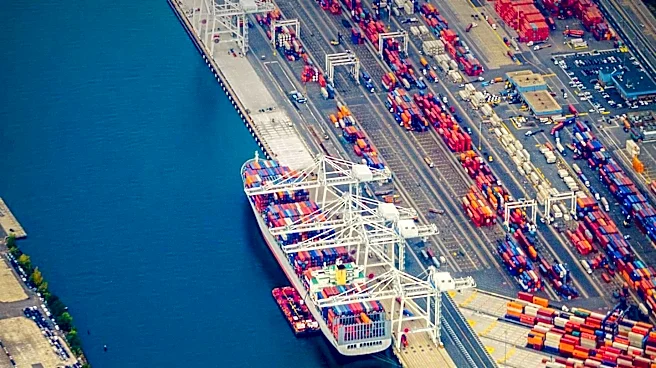
The Port of Long Beach is increasingly focusing on electric infrastructure as part of its zero-emission strategy, despite maintaining a technology-neutral policy language. The port's investments in chargers, electrical infrastructure, and electric cargo-handling
equipment indicate a shift towards electrification over hydrogen. This move comes after years of promoting hydrogen through various demonstration projects. The port's current capital investments suggest a preference for electric solutions, which are becoming more integrated into terminal operations. This shift is significant as it reflects a broader trend towards electrification in cargo handling, despite the port's continued use of zero-emission terminology that includes both batteries and hydrogen.
Why It's Important?
The Port of Long Beach's focus on electrification over hydrogen has implications for the future of clean technology in port operations. By investing in electric infrastructure, the port is setting a precedent for other ports and large institutions to follow. This decision could influence the direction of future investments and policy decisions, potentially accelerating the adoption of electric solutions in the transportation and logistics sectors. The shift also highlights the challenges hydrogen faces in becoming a mainstream solution, as electric systems offer more immediate and scalable benefits in terms of infrastructure and operational efficiency.
What's Next?
As the Port of Long Beach continues to invest in electric infrastructure, it is likely to further integrate electric solutions into its operations. This could lead to increased procurement of electric cargo-handling equipment and further development of charging infrastructure. The port's approach may also influence other ports and transportation hubs to adopt similar strategies, potentially leading to a broader shift towards electrification in the industry. However, hydrogen may still play a role in specific applications, such as long-haul transportation, where its advantages in range and refueling time are more pronounced.