




What's Happening?
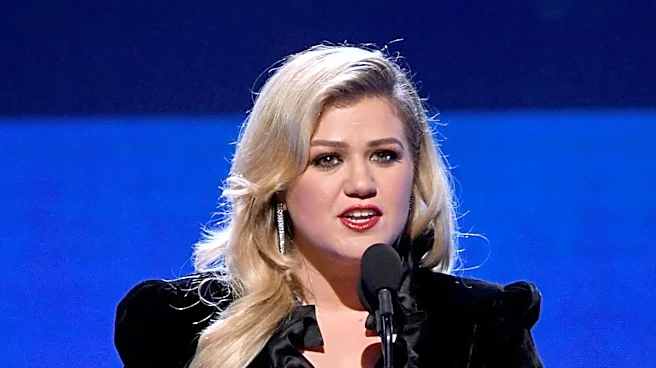
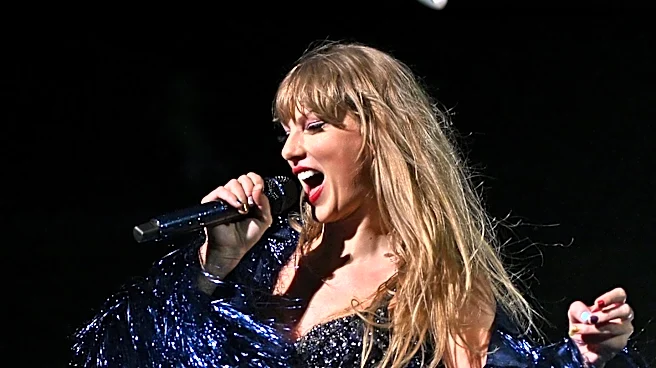
Pop singer Kelly Clarkson has publicly shared her fascination with artificial intelligence (AI) technology, particularly its applications within the music industry. During an appearance on the podcast 'Las Culturistas,' Clarkson stated she is 'obsessed'
with AI and its creative potential. While acknowledging the divisive nature of AI in creative fields, she emphasized her belief that AI-generated music should not directly compete with human-made music on the same charts. Clarkson suggested the creation of separate music charts to distinguish between human artists and AI artists, allowing both to be recognized without direct competition. She highlighted the exciting possibilities AI offers for musical creation, enabling individuals who might not have had certain capabilities before to now engage in music production. Clarkson also mentioned her frequent use of ChatGPT for personal projects, such as interior design, further illustrating her engagement with AI tools.
Why It's Important?
Kelly Clarkson's stance on AI in music is significant as it comes from a prominent figure in the entertainment industry, reflecting a growing conversation about the role of technology in creative arts. Her advocacy for separate music charts could influence how the industry categorizes and values different forms of artistic output, potentially leading to new frameworks for recognition and compensation. This perspective addresses concerns about fair competition and the preservation of human artistry in an increasingly AI-driven landscape. If adopted, such a system could help maintain the distinct value of human creativity while still embracing technological advancements. The debate also highlights the broader societal implications of AI, touching upon intellectual property, artistic integrity, and the future of creative professions. Her comments contribute to a larger dialogue among artists, industry executives, and policymakers regarding the ethical and practical integration of AI into creative sectors.
What's Next?
The discussion initiated by Kelly Clarkson regarding separate music charts for AI and human artists could prompt further dialogue within the music industry. This might lead to industry bodies, such as Billboard or other chart-ranking organizations, considering proposals for new categorization methods. Stakeholders, including record labels, artist associations, and technology companies, may engage in discussions to explore the feasibility and implications of such a system. The ongoing evolution of AI technology in music production will likely necessitate continued conversations about intellectual property rights, artist compensation, and the definition of authorship. Future developments could include the establishment of industry standards or guidelines for AI-assisted music, potentially influencing how music is created, distributed, and consumed. The broader impact of AI on creative industries will continue to be a focal point, with artists and technologists exploring both its benefits and challenges.
Beyond the Headlines
Clarkson's 'obsession' with AI and her call for distinct recognition for human and AI-generated music delve into deeper ethical and philosophical questions about creativity and authenticity. The rise of AI in creative fields challenges traditional notions of artistry, prompting a re-evaluation of what constitutes 'art' and who qualifies as an 'artist.' This development could lead to a cultural shift in how audiences perceive and value creative works, potentially fostering new forms of appreciation for both human ingenuity and technological innovation. The debate also touches upon the economic implications for human artists, as AI tools become more sophisticated and accessible, potentially altering career paths and revenue streams in the music industry. Furthermore, the discussion extends beyond music to other creative sectors, raising questions about the future of human-led creativity in an increasingly automated world and the need for frameworks that protect and celebrate human artistic contributions.