




What's Happening?
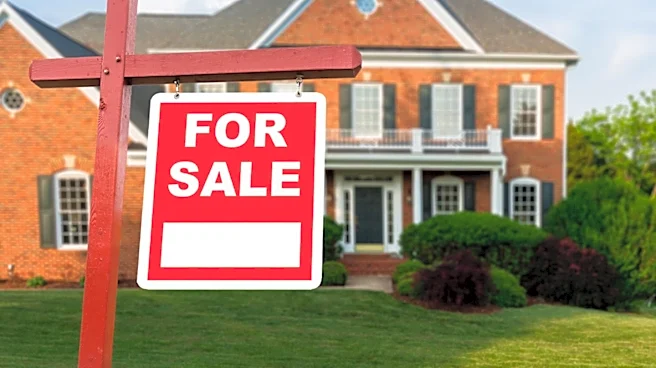
The U.S. real estate market is experiencing a significant surge in the number of agents, including a growing trend of C-list celebrities and individuals with large social media followings entering the profession. This influx has led to an oversaturated
market, with the National Association of Realtors (NAR) membership now exceeding the number of homes for sale. Figures like Kelly Killoren Bensimon, Nêv Schulman, and Vanilla Ice have transitioned into real estate, leveraging their public profiles and social networks to attract clients. While some, like Bensimon, possess business acumen, many new agents may lack extensive experience. This situation is exacerbated by the relatively low barriers to entry for obtaining a real estate license, with some states requiring as little as 40 hours of schooling, significantly less than other licensed professions.
Why It's Important?
The proliferation of inexperienced agents, including those leveraging celebrity status, poses potential risks for consumers engaging in one of life's most significant financial transactions. With a market flooded with agents, finding a truly competent professional capable of securing the best deal has become more challenging. The Consumer Federation of America estimates that 'marginal agents'—those with fewer than five home sales a year—account for a substantial portion of commission money in some middle-class cities, suggesting that sellers might receive less than their property is worth, and buyers could overpay. This trend could erode consumer confidence in the industry and highlights a potential decline in professional standards, reminiscent of historical periods when the industry faced issues with underqualified practitioners.
What's Next?
The real estate industry may face increasing pressure to address the concerns surrounding agent quality and market saturation. Consumers are advised to conduct thorough research when selecting an agent, looking beyond social media presence or celebrity status to assess actual experience and market knowledge. There could be calls for stricter licensing requirements at the state level and for brokerages to implement more rigorous ongoing supervision and training for agents. The National Association of Realtors, which historically raised professional standards, may need to re-evaluate its role in ensuring agent competency amidst this influx. Without such measures, the market could continue to see a disparity in agent quality, potentially leading to less favorable outcomes for homebuyers and sellers.
Beyond the Headlines
The rise of celebrity and influencer real estate agents reflects broader societal trends where personal branding and social media influence are increasingly monetized across various sectors. This phenomenon blurs the lines between entertainment, marketing, and professional services, raising questions about the true value proposition offered by agents whose primary asset might be their public profile rather than deep industry expertise. Ethically, it challenges the traditional notion of professionalism, where expertise and client advocacy are paramount. Legally, it could lead to increased scrutiny of agent conduct and potential consumer protection issues if inexperienced agents fail to meet professional standards. Culturally, it underscores a shift towards valuing visibility over vocational mastery, potentially reshaping consumer expectations and the public perception of the real estate profession.