


What's Happening?
Smart Manufacturing Week (SMW) is set to return to the NEC Birmingham on June 9–10, 2027, introducing several new features aimed at driving the manufacturing sector forward. Following a successful 2026 event, SMW 2027 will debut the 'Factory of the Future'
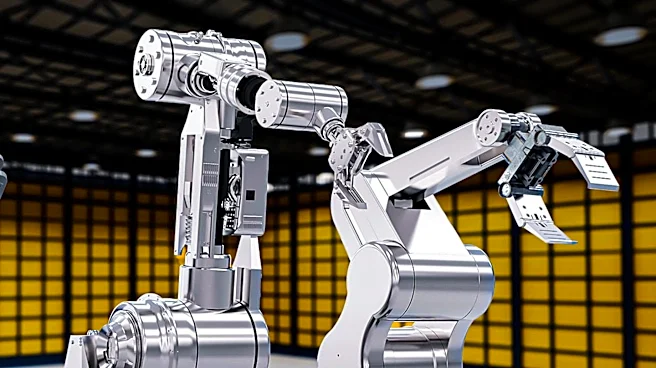
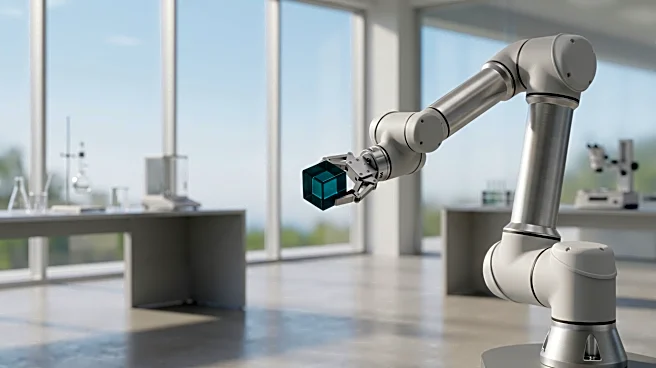
as a major immersive feature, bringing to life the next generation of connected, intelligent, and secure manufacturing. This feature, developed in partnership with AMIC (Advanced Manufacturing Innovation Centre) and the University of Belfast, will integrate digital manufacturing, automation, AI, digital twins, cybersecurity, sustainability, and connected supply chains into a live, modular manufacturing environment. Additionally, a dedicated '3D Printing + Additive Manufacturing Zone' will be launched, focusing on connecting high-level strategy with practical implementation. Other new features include 'Fight Fest,' a competitive robot fighting event, and the 'SmART Gallery,' showcasing winning entries from Make UK’s 2026 Photography Competition, alongside an 'SME Village' designed to support small and medium-sized enterprises.
Why It's Important?
Smart Manufacturing Week 2027, while held in the UK, is highly relevant to the U.S. manufacturing industry due to its focus on global trends and technologies. The introduction of features like the 'Factory of the Future' and the '3D Printing + Additive Manufacturing Zone' highlights critical advancements in automation, artificial intelligence, and advanced materials that are transforming manufacturing worldwide. U.S. manufacturers, facing similar challenges in productivity, supply chain resilience, and workforce development, can draw insights from these innovations. The emphasis on integrating digital twins, cybersecurity, and sustainable practices reflects a universal need for smarter, more secure, and environmentally responsible production methods. The 'SME Village' also addresses the vital role of small and medium-sized enterprises, a backbone of the U.S. manufacturing sector, in adopting new technologies and accessing support. U.S. companies and policymakers will be observing these developments to inform their own strategies for maintaining competitiveness and fostering innovation in a rapidly evolving global landscape.
What's Next?
Following Smart Manufacturing Week 2027, the showcased technologies and concepts are expected to influence manufacturing practices globally, including in the U.S. Manufacturers who attend or follow the event will likely evaluate the feasibility of integrating advanced solutions like digital twins, AI-driven automation, and additive manufacturing into their own operations. The insights gained from the 'Factory of the Future' demonstration could lead to increased investment in connected production ecosystems and cybersecurity measures within U.S. factories. The '3D Printing + Additive Manufacturing Zone' is anticipated to accelerate the adoption of these technologies for rapid prototyping, lightweight tooling, and on-demand production across various industries. Furthermore, the discussions and solutions presented in the 'SME Village' could inspire new support programs and initiatives for small and medium-sized manufacturers in the U.S., helping them overcome barriers to technology adoption and growth. The event's impact will be seen in the continued evolution of manufacturing processes and strategies in the years to come.
Beyond the Headlines
Smart Manufacturing Week 2027's focus on advanced manufacturing technologies and integrated ecosystems points to a profound transformation of the industrial landscape, with significant ethical, social, and economic implications. The rise of AI, automation, and robotics, as highlighted by the 'Factory of the Future' and 'Fight Fest,' raises questions about the future of work, job displacement, and the need for workforce retraining. The emphasis on cybersecurity within connected manufacturing environments underscores the increasing vulnerability of industrial systems to cyber threats, necessitating robust protective measures and international collaboration. Furthermore, the push for sustainable manufacturing practices, integrated into the 'Factory of the Future,' reflects a growing global imperative to address climate change and resource depletion. This shift will require ethical considerations regarding environmental impact, supply chain transparency, and corporate responsibility. The 'SmART Gallery' and 'SME Village' also touch upon the cultural and community aspects of manufacturing, emphasizing the importance of human creativity, skill development, and supporting local economies in an increasingly automated world.