







What's Happening?
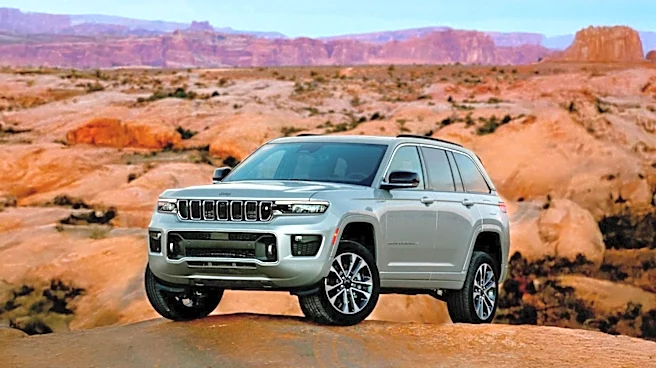
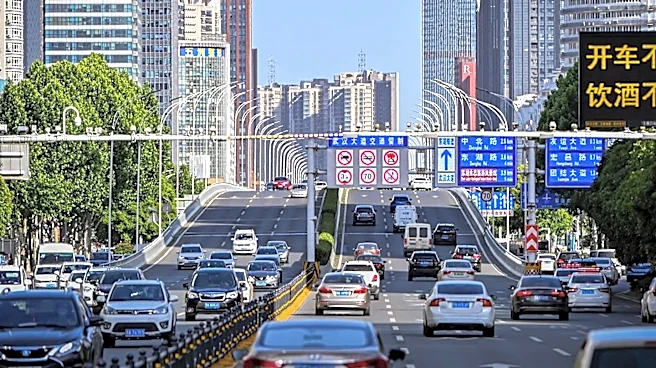
Stellantis has announced that Jeep production will resume in China, specifically for global export markets, with the notable exception of the United States. Lv Haitao, general manager of Dongfeng Stellantis Automotive Technology, confirmed this development.
He indicated that while Jeeps will be manufactured in China for international distribution, they will not be sold in the U.S. market due to the existing 'thicket of hurdles facing Chinese-made electric vehicles.' This move signifies a strategic shift for Stellantis, leveraging manufacturing capabilities in China to serve other global regions, while acknowledging the complex trade and regulatory environment that currently prevents the import of Chinese-made vehicles into the U.S.
Why It's Important?
This decision by Stellantis to produce Jeeps in China for export, excluding the U.S., highlights the intricate global supply chain dynamics and geopolitical considerations impacting the automotive industry. For the U.S. market, it underscores the ongoing trade tensions and regulatory barriers, particularly concerning electric vehicles manufactured in China. This strategy allows Stellantis to potentially reduce production costs and enhance its competitive position in various international markets by utilizing Chinese manufacturing efficiencies. However, it also means that U.S. consumers will not have access to these specific Chinese-made Jeep models, which could limit product diversity or competitive pricing for certain segments. The 'thicket of hurdles' mentioned by Lv Haitao likely refers to tariffs, import restrictions, and other policy measures designed to protect domestic industries and address concerns about intellectual property and national security, which significantly influence automotive trade flows between the U.S. and China.
What's Next?
Stellantis will proceed with resuming Jeep production in China, focusing on fulfilling demand in global markets outside the U.S. This strategy suggests a continued effort by the company to optimize its manufacturing footprint and supply chain to serve diverse international customer bases. The exclusion of the U.S. market indicates that Stellantis will likely continue to rely on its existing production facilities in other regions, including North America, to supply American consumers. The 'thicket of hurdles' for Chinese-made electric vehicles in the U.S. is unlikely to dissipate quickly, suggesting that this export-only-excluding-U.S. approach will remain in place for the foreseeable future. This situation may prompt other multinational automakers to evaluate similar strategies, balancing global manufacturing efficiencies with regional trade policies and consumer preferences.
Beyond the Headlines
The decision to produce Jeeps in China for global export, while bypassing the U.S. market, reflects a broader trend of decoupling in certain industrial sectors between the U.S. and China. This strategic move by Stellantis is not merely an economic calculation but also a response to the evolving geopolitical landscape and trade policies. It highlights the challenges faced by global corporations in navigating a world increasingly characterized by protectionism and national industrial policies. The 'hurdles' for Chinese-made EVs in the U.S. are symptomatic of deeper concerns about economic competition, technological leadership, and supply chain resilience. This situation could lead to a more fragmented global automotive market, where different regions are served by distinct manufacturing hubs and product lines. It also raises questions about the long-term implications for global trade, innovation, and the potential for increased regionalization of manufacturing, impacting consumers, workers, and environmental standards worldwide.