


What's Happening?
Anduril, a defense technology company based in Costa Mesa, California, is significantly expanding its engineering presence in the greater Seattle region, with plans to reach 1,000 engineers. The company, which recently secured $5 billion in funding at a $61
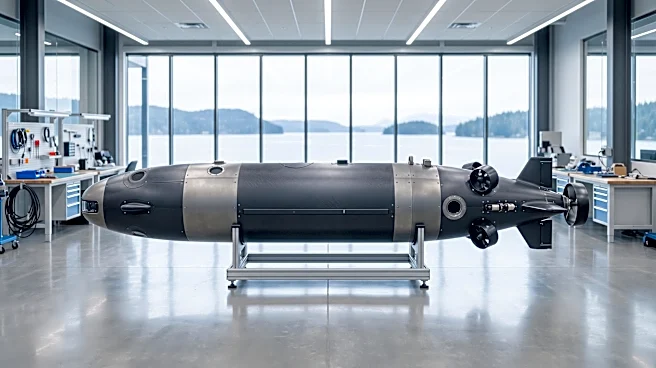
billion valuation, is developing AI-driven, autonomous technologies for military applications. Its Seattle-area operations include offices in downtown Bellevue and Seattle, and a military testing facility near Carnation, Washington. Senior Vice President Tom Keane, who leads Anduril’s local presence and connected warfare division, indicated that this hiring milestone could be achieved within the next two years. Anduril currently employs 560 people in its Bellevue and Seattle offices, a substantial increase from approximately 30 four years ago. The company is actively recruiting from major tech firms in the area, seeking talent in distributed systems engineering, AI, machine learning, and advanced optics. Despite a recent setback with the cancellation of a U.S. Navy autonomous warship program that led to vacating a maritime manufacturing hub, Anduril continues to develop a large subsea fleet alongside its autonomous aircraft, cruise missiles, and counter-drone interceptors.
Why It's Important?
This aggressive expansion by Anduril in the Seattle area signifies a growing trend of defense technology companies tapping into established tech talent pools. The company's focus on AI-driven autonomous systems for military use highlights a critical shift in modern warfare, emphasizing technological superiority and efficiency. By aiming for 1,000 engineers, Anduril is not only creating numerous high-skilled jobs but also contributing to the region's economic diversification beyond traditional tech giants. The development of advanced military hardware and software, such as the lightweight EagleEye augmented reality system and digital night-vision goggles, could significantly enhance the capabilities of the U.S. military and its allies, potentially altering geopolitical dynamics. The company's 'grit' culture, which prioritizes hands-on problem-solving and field testing, offers a distinct alternative to the work environments often found in larger tech companies, potentially attracting engineers seeking more direct impact from their work. This growth also underscores the increasing integration of commercial tech innovation into national defense strategies, blurring the lines between the civilian and military technology sectors.
What's Next?
Anduril is expected to continue its rapid hiring in the Seattle region, with a goal of reaching 1,000 engineers within the next two years. The company has over 110 open positions in Washington state and is expanding its office space in downtown Seattle. Future developments include the deployment of its digital night vision system as part of the Soldier Borne Mission Command prototype delivery to the U.S. Army next year. Anduril will likely continue to recruit aggressively from local tech companies, offering engineers opportunities to work on high-stakes physical problems and see their work implemented in the field. The company's ongoing development of autonomous aircraft, cruise missiles, counter-drone interceptors, and a large subsea fleet suggests a continuous stream of innovative defense technologies. Despite past protests against its autonomous weapons development, Anduril maintains that such opposition does not affect its hiring efforts, indicating a continued focus on its mission and growth trajectory.
Beyond the Headlines
Anduril's expansion in the Seattle area raises broader questions about the ethical implications of AI-driven autonomous warfare and the role of private tech companies in national defense. The company's 'Don't Work at Anduril' recruiting campaign, which emphasizes 'grit' over traditional tech perks, reflects a deliberate cultural strategy to attract engineers who are motivated by challenging, impactful work in a defense context. This approach could influence how other defense contractors recruit talent and how the tech industry perceives its role in military innovation. The integration of advanced technologies like augmented reality and AI into military equipment also brings forth discussions about soldier-machine teaming, data security in battlefield environments, and the potential for reduced human intervention in combat decisions. Furthermore, the proximity of Anduril's operations to major military installations like Joint Base Lewis-McChord and Naval Base Kitsap highlights a strategic alignment that could foster closer collaboration between tech developers and active-duty military personnel, potentially accelerating the adoption and refinement of new defense technologies.