





What's Happening?
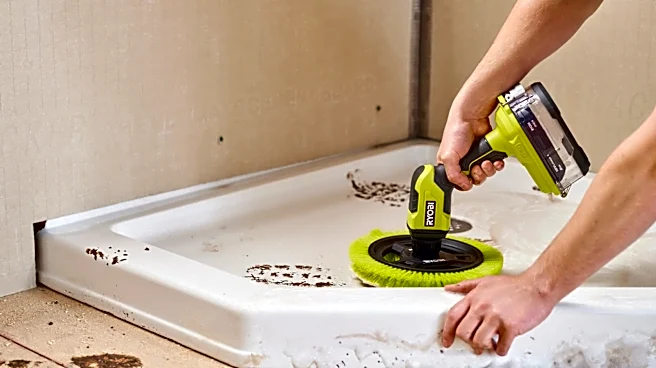
Ryobi has expanded its tool lineup with new USB-charged lithium-ion-powered tools, designed to address common household problems and smaller jobs. These tools, which are distinct from Ryobi's 18V ONE+ system, are compact and powered by USB-charged batteries
available in 2Ah and 3Ah capacities. The company emphasizes that while these tools are not meant to replace their full-sized counterparts, they offer practical solutions for quick fixes and household annoyances where larger power tools would be excessive. Examples of these new tools include a USB Lithium Glue Gun for crafting and repairs, and a USB Lithium power cutter with a self-sharpening blade capable of cutting through materials like plastic, cardboard, rubber, and carpet. This expansion aims to provide affordable and convenient options for everyday DIY tasks.
Why It's Important?
This introduction of affordable, compact USB Lithium tools by Ryobi is significant for the U.S. consumer market, particularly for homeowners and DIY enthusiasts. By offering tools under $60, Ryobi makes home maintenance and small project completion more accessible to a broader demographic, potentially reducing the need for professional services for minor repairs. The convenience of USB charging also enhances portability and ease of use, appealing to those who may not have extensive workshop setups. This move could stimulate the DIY market, encouraging more individuals to undertake small home improvement tasks themselves. It also highlights a trend in the tool industry towards more specialized, user-friendly, and cost-effective solutions for everyday problems, rather than solely focusing on heavy-duty professional equipment.
What's Next?
Consumers can expect to see these new USB Lithium Ryobi tools become widely available in retail stores and online, catering to a growing demand for practical and affordable home repair solutions. Ryobi may continue to expand this line with additional tools designed for specific household tasks, further solidifying its presence in the compact DIY tool market. Competitors in the power tool industry might respond by developing their own lines of USB-charged or similarly compact and affordable tools, leading to increased innovation and competition in this segment. The success of these tools could also influence future product development, with a greater emphasis on portability, ease of use, and energy efficiency in household tools.
Beyond the Headlines
The shift towards USB-powered tools like those introduced by Ryobi reflects a broader societal trend towards convenience and sustainability. USB charging, a ubiquitous standard, simplifies power management for consumers, reducing the need for specialized chargers and promoting interoperability. This also aligns with a growing environmental consciousness, as smaller, more efficient tools can potentially consume less energy and reduce waste compared to larger, more power-intensive alternatives. Furthermore, the affordability of these tools democratizes access to home repair capabilities, empowering individuals to be more self-reliant and fostering a culture of practical problem-solving. This could lead to a subtle but significant change in how people approach home maintenance, moving away from immediate professional reliance towards a more hands-on approach.