





What's Happening?
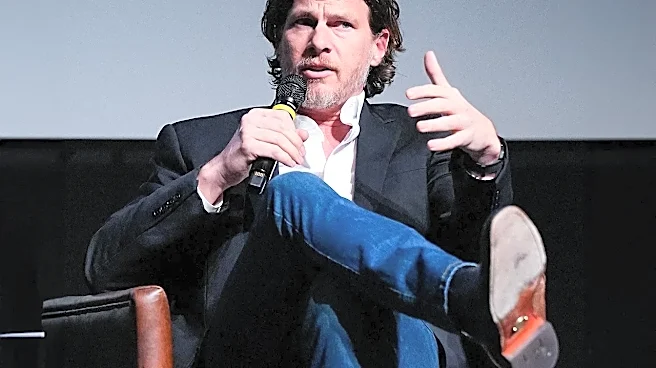
Filmmaker Ted Fendt, known for his esoteric and intellectual approach to cinema, discussed his creative process and philosophy behind his new film, 'Foreign Travel,' in an interview with In Review Online. Fendt's film, which details a year in the life
of a Berlin-based translator, Leonie, is characterized by its use of analog film stocks, long takes, and intellectual conversations. Fendt explained his preference for working within limitations, such as the 11-minute roll of film and limited film stock, which he believes creates focus. He also detailed his unique editing process, where he would edit scenes as they were shot, allowing him to remove elements that didn't fit the film's evolving tonality, thus making the production more economical. Fendt emphasized that his films aim to capture the 'essence of cinema' by focusing on direct experience and the concrete quality of filmed reality, rather than spectacle.
Why It's Important?
Fendt's filmmaking philosophy offers a significant counter-narrative to the prevailing trends in contemporary cinema, which often prioritize digital perfection and elaborate post-production. His commitment to analog film and working within technical limitations highlights a deliberate artistic choice that impacts the aesthetic and thematic depth of his work. This approach is important for the film industry as it champions alternative methods of production, potentially inspiring other independent filmmakers to explore similar constraints for creative expression. By focusing on the 'indexicality' of film – the direct imprint of reality – Fendt challenges audiences to engage with cinema on a more fundamental level, emphasizing the raw, unmanipulated aspects of visual storytelling. This could foster a greater appreciation for the craft of filmmaking and the unique qualities of different mediums.
What's Next?
Fendt continues to advocate for analog cinema, expressing his desire to make film prints and his belief in the superior quality of analog projection. He mentioned plans for a new 16mm print of 'Foreign Travel' and the possibility of shooting a future project on 50D film stock, known for its high contrast. His ongoing work and discussions will likely continue to influence independent filmmaking circles and film festivals that champion experimental and art-house cinema. As digital technology becomes increasingly dominant, Fendt's dedication to traditional film methods serves as a critical voice for preserving and exploring the unique artistic possibilities of analog formats. His future projects will likely continue to push boundaries in terms of narrative structure and visual style, maintaining his distinct intellectual and observational approach.
Beyond the Headlines
Fendt's critique of modern sound design and color grading, where he feels excessive control leads to an 'overworked' and less compelling result, delves into a deeper philosophical debate about the nature of art and technology. He argues that limitations, rather than boundless possibilities, often foster greater creativity and authenticity. This perspective extends beyond filmmaking to other artistic disciplines, suggesting that the pursuit of absolute control in digital creation might inadvertently diminish the 'human imprint' and the raw, immediate experience that art can offer. His work, therefore, becomes a commentary on the broader impact of technology on artistic expression, prompting reflection on whether the ability to manipulate every pixel and sound byte truly enhances or detracts from the essence of storytelling and human connection in media.