




What's Happening?
Aman Group has announced plans for Aman Seoul, its first property in South Korea, as part of an ongoing strategy to expand its luxury hospitality model beyond remote resorts into major global cities. The 70,000-square-meter development will feature an Aman hotel,
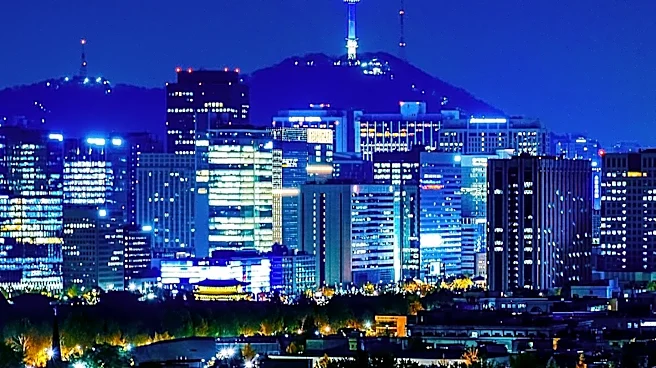
49 branded residences, an Aman Spa, an Aman Club, and retail and cultural spaces, aiming to create an 'urban sanctuary' in Seoul's affluent Gangnam district. This project is a collaboration with South Korean real estate developer Shinsegae Property, which will oversee planning and development. The announcement follows a strategic partnership formed in July between Shinsegae Property and Miami-based OKO Group, owned by Aman chair and CEO Vlad Doronin. This joint venture includes an initial US$500 million commitment to develop Aman and Janu hotels and residences across Asia and North America, as well as mixed-use property projects. Aman Seoul will be located in the Cheongdam-dong neighborhood, overlooking the Han River, on the site of the former Prima Hotel, and will comprise eight basement levels and 38 floors above ground.
Why It's Important?
This expansion signifies a strategic shift for Aman Group, moving from its traditional focus on secluded, private resorts to integrating luxury hospitality into bustling urban environments. The development of Aman Seoul, alongside other planned urban projects like Aman Miami Beach and Aman Beverly Hills, reflects a broader trend in the luxury market to cater to wealthy consumers seeking both exclusive experiences and convenient city access. The partnership with Shinsegae Property and OKO Group, backed by a substantial US$500 million investment, underscores the financial commitment and strategic intent behind this urban diversification. For the U.S. market, the planned Aman Miami Beach and Aman Beverly Hills projects indicate a growing demand for integrated luxury living and hospitality in key American cities, potentially influencing real estate development and luxury service offerings. This move allows Aman to build relationships with local affluent consumers through private membership clubs, extending its brand influence beyond transient hotel guests and into permanent lifestyle integration.
What's Next?
Aman Group will continue to expand its urban footprint, with Aman Miami Beach and Aman Beverly Hills scheduled to open in 2028, following Aman Tokyo (2014), Aman New York (2022), and Aman Nai Lert Bangkok (2025). The company will also further develop its sister brand, Janu, with Janu Tokyo opening in 2024, and launch Aman at Sea with its first yacht, Amangati, in Q2 2027. Further details on the completion date for Aman Seoul and operational partners will be released as plans progress. The strategic partnership with Shinsegae Property and OKO Group is expected to drive additional mixed-use luxury real estate developments globally, leveraging Shinsegae’s development capabilities and Aman’s brand recognition. This ongoing expansion into diverse lifestyle businesses, including skincare, fragrance, clothing, and interior design, indicates Aman's ambition to evolve into a comprehensive global luxury lifestyle platform.
Beyond the Headlines
Aman's pivot towards urban developments and branded residences highlights a significant evolution in the luxury hospitality sector, moving beyond traditional hotel stays to offer a holistic lifestyle experience. This strategy taps into the desire for permanent ownership and exclusive membership, creating a deeper connection with affluent consumers. The integration of wellness facilities, private clubs, and cultural spaces within these urban sanctuaries reflects a growing demand for comprehensive luxury amenities that cater to both physical and mental well-being. This trend could reshape urban planning in high-value areas, with more mixed-use developments combining hospitality, residential, and lifestyle components. The emphasis on local craftsmanship and cultural connection, as seen in the design plans for Aman Seoul, also suggests a nuanced approach to global expansion, aiming to integrate local identity within a universal luxury brand. This model could influence how other luxury brands approach market penetration and customer loyalty in an increasingly competitive global landscape.