


What's Happening?
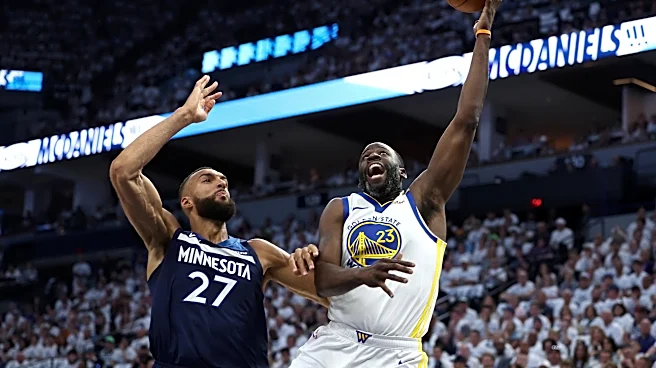
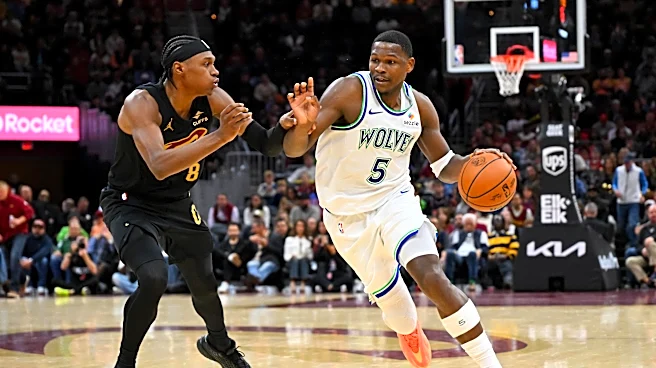
Minnesota Timberwolves coach Chris Finch has pinpointed several critical issues following his team's 119-114 loss to the Golden State Warriors on October 28. Finch cited turnovers, poor shot selection, and a lack of physicality as primary factors in the defeat.
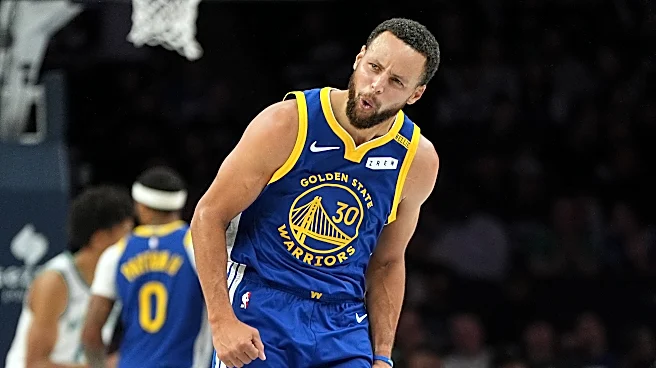
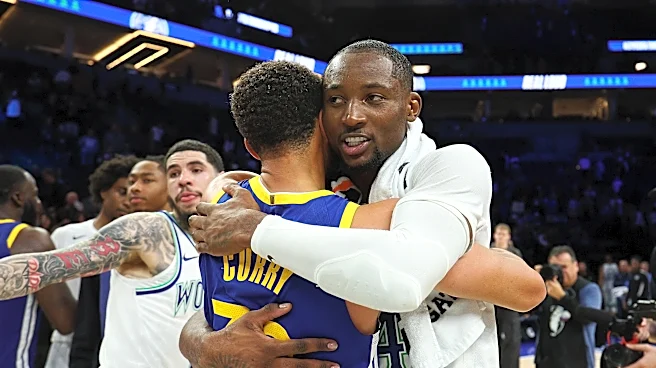
The Timberwolves, playing without star guard Anthony Edwards due to arthroscopic knee surgery, trailed by as many as 24 points before mounting a fourth-quarter comeback. Stephen Curry's 44 points and perfect 16-for-16 free-throw performance were instrumental for the Warriors. Finch noted that the team's early offensive struggles stemmed from a 'one pass, one action, one shot' mentality, leading to forced plays and difficulty creating clean passing angles against Golden State's defense. He also criticized the team for fouling excessively, which allowed Curry numerous free-throw opportunities. Despite the loss, Finch praised players like Trey Lyles for his versatility and the energy provided by Joan Beringer, Jaylen Clark, and Bones Hyland during the comeback effort. The Timberwolves' record now stands at 3-2 after starting the season 3-0.
Why It's Important?
This loss and Coach Finch's subsequent analysis highlight the immediate challenges facing the Minnesota Timberwolves in the absence of Anthony Edwards, a key offensive force who averaged 33.3 points in the team's first four games. Edwards' injury creates a significant void that the team is struggling to fill, as evidenced by the breakdown in offensive rhythm and increased desperation in shot selection. The team's reliance on individual efforts rather than cohesive play, as described by Finch, indicates a potential shift in team dynamics and strategy. The need for other players to 'raise their level' and maintain the team's flow without forcing offense is crucial for sustained success. This period will test the team's depth, adaptability, and coaching staff's ability to re-establish a winning formula. How the Timberwolves adjust to Edwards' absence will significantly impact their standing in the Western Conference and their playoff aspirations, as early season momentum could be lost if these issues persist.
What's Next?
The Minnesota Timberwolves are scheduled to host the Los Angeles Clippers on October 30, which will be their next opportunity to address the issues identified by Coach Finch. The team will need to focus on improving ball movement, reducing turnovers, and making smarter shot selections to regain their early-season form. With Anthony Edwards expected to miss extended time, other players will need to step up collectively to fill the scoring void and maintain offensive efficiency. Finch's emphasis on playing with more force and creating better scoring opportunities suggests a potential shift in offensive strategy, possibly involving more player movement and passing combinations. The performance against the Clippers will be a key indicator of whether the team can quickly adapt to playing without their star player and implement the necessary adjustments to their game plan. The coaching staff will likely work on reinforcing team chemistry and ensuring players stick to established offensive flows rather than forcing individual plays.
Beyond the Headlines
The Timberwolves' current situation extends beyond a single game loss; it represents a critical juncture for the team's identity and long-term strategy. The absence of a primary scorer like Anthony Edwards often forces teams to evolve, potentially leading to a more balanced offensive attack or the emergence of new playmakers. This period could inadvertently foster greater team cohesion and reliance on collective effort, which might benefit the team in the long run, even after Edwards returns. However, it also exposes potential vulnerabilities in depth and offensive structure. The challenge for Coach Finch is not just to win games but to cultivate a system where players can thrive without their star, ensuring that the team remains competitive and develops resilience. This adaptation phase could redefine roles for several players and test the organizational philosophy regarding player development and strategic flexibility in the face of adversity.