







What's Happening?
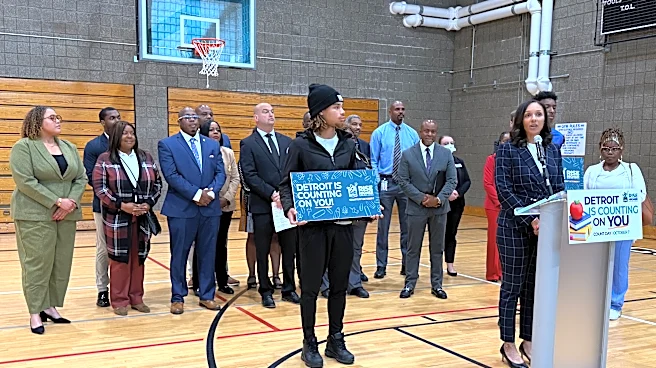
The Neighborhood Advisory Council (NAC) in Detroit is preparing to draft a Community Benefits Agreement (CBA) for the proposed $2.2 billion redevelopment of the Renaissance Center and East Riverfront project, spearheaded by General Motors Co. and Dan
Gilbert’s Bedrock LLC. Residents and local advocates have expressed long-standing concerns regarding the project, particularly about the significant public funding requested by developers and the actual benefits for Detroiters, especially Black residents and local businesses. The NAC, chaired by Jamaine Dickens, is tasked with organizing community feedback and negotiating with developers to ensure tangible benefits for the city. The project involves demolishing two of the five Renaissance Center towers, converting others into housing, hotel, and office spaces, and developing a 30-acre riverfront entertainment district.
Why It's Important?
This negotiation is crucial for Detroit as it represents a significant test of the city's Community Benefits Ordinance (CBO), established in 2016 to ensure large-scale developments provide tangible advantages to residents. The project's estimated cost of over $2.2 billion, with developers seeking $548 million in public subsidies and tax breaks, raises critical questions about the equitable distribution of economic growth. Residents' concerns about affordability, accessibility, environmental impact, and the potential for gentrification highlight the ongoing challenge of balancing urban development with community needs. The outcome will set a precedent for future large-scale projects in Detroit, influencing how public funds are utilized and whether such developments genuinely serve the broader community, beyond just economic metrics. It underscores the power dynamics between developers and local residents in shaping the future of urban landscapes.
What's Next?
The Neighborhood Advisory Council will now enter a closed, line-by-line drafting process to develop the Community Benefits Agreement by next Tuesday's deadline. This follows the closure of formal community feedback gathering. The NAC's goal is to present a comprehensive document that addresses the community's concerns and demands, including increasing affordable housing units, contributing to Detroit’s Affordable Housing Trust Fund, and ensuring strong green building and public access standards. Developers will then engage in negotiations with the NAC. The process is expected to be dynamic, with the agreement remaining a 'living document' until its finalization in late October. Residents can continue to provide feedback through various channels, including remaining CBO weekly meetings and a public engagement hub.
Beyond the Headlines
The Renaissance Center redevelopment project and the ongoing CBA negotiations delve into deeper societal implications concerning urban revitalization and social equity. The skepticism from residents, particularly regarding the benefits for Black Detroiters and local businesses, points to historical patterns of development that have not always served all segments of the population equally. The debate over public subsidies for private development also highlights fundamental questions about economic justice and the role of government in fostering inclusive growth. This process is not just about a single development; it's about defining Detroit's future identity—whether it will be a city where economic prosperity is broadly shared, or one where development primarily benefits a select few. The CBO, while a progressive tool, faces the challenge of ensuring that the voices of all residents are genuinely heard and translated into concrete, equitable outcomes.