




What's Happening?
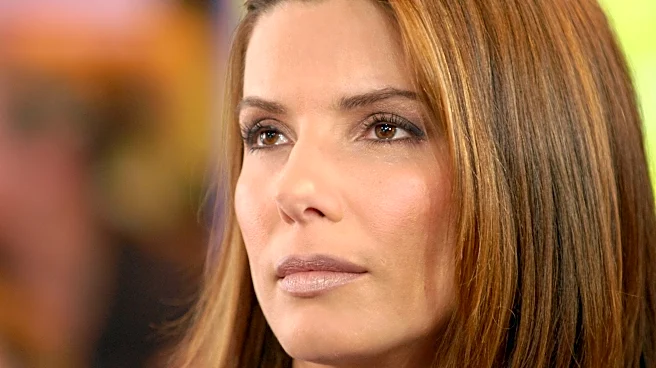
In 1994, following her success in 'Speed' alongside Keanu Reeves, actress Sandra Bullock was offered the role of Dr. Chase Meridian in Joel Schumacher's 'Batman Forever'. This superhero film, which starred Val Kilmer as Batman, aimed for Bullock to portray
a psychologist who becomes romantically involved with the Caped Crusader. Despite the film's eventual commercial success, Bullock chose to decline the role. She later admitted in an interview with the San Francisco Chronicle that she had not even read the script before making her decision. Bullock expressed a preference for more unconventional roles, stating she would have been more interested in playing characters like the Joker's sister or the Riddler's evil sister, rather than the typical love interest. The role of Dr. Chase Meridian ultimately went to Nicole Kidman.
Why It's Important?
Sandra Bullock's decision to turn down a major role in 'Batman Forever' highlights the strategic choices actors make in shaping their careers. While the film went on to gross approximately $336 million worldwide, becoming one of the highest-grossing films of 1995, Bullock's choice reflected a desire to avoid typecasting and pursue roles that offered more depth or unconventional characterizations. This decision, made at a pivotal point in her career, demonstrates an actress prioritizing artistic preference over immediate box office potential. For the film industry, it illustrates how casting decisions can significantly alter the trajectory of a production and the careers of those involved, as Nicole Kidman subsequently took on the role that Bullock passed on.
What's Next?
While this event occurred in the past, its implications for Bullock's career trajectory are evident in her subsequent filmography, which features a diverse range of roles beyond typical romantic leads. Her preference for 'unusual roles' has allowed her to explore various genres and character types, contributing to her longevity and versatility in Hollywood. For aspiring actors, this serves as an example of how early career choices, even those that forgo immediate blockbusters, can define an artist's brand and lead to a more fulfilling and varied career path. The film itself, 'Batman Forever', remains a notable entry in the Batman franchise, often discussed in the context of its casting and stylistic choices.
Beyond the Headlines
Bullock's decision to reject the role in 'Batman Forever' delves into the broader discussion of gender roles in superhero films during the 1990s. Her stated disinterest in playing the 'typical woman who falls in love with the superhero' reflects a desire for more complex female characters, a sentiment that has grown significantly within the industry over the decades. This choice subtly challenged the prevailing norms of female representation in blockbuster cinema at the time, advocating for roles that offered more agency and depth than simply being a romantic interest. It underscores a continuous industry evolution towards more nuanced and diverse portrayals of women in leading roles, moving beyond traditional archetypes.