







What's Happening?
Homeowners are seeking practical advice on maximizing storage in small spaces, particularly for bulky items like comforters. The guidance emphasizes strategic folding techniques, the use of appropriate storage containers, and efficient closet organization.
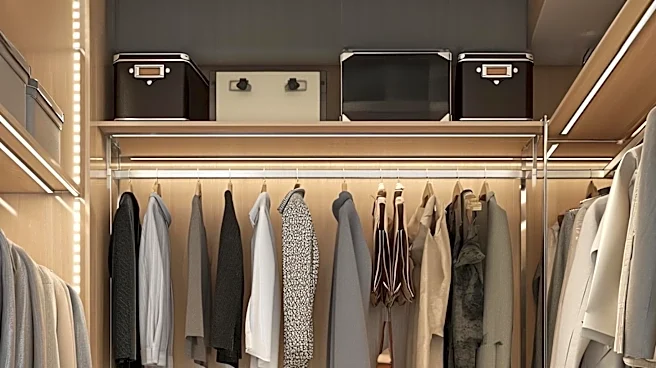
Key recommendations include utilizing under-bed storage, maximizing vertical closet space with adjustable shelves, and employing breathable fabric bags for comforters. For folding, compact rectangles are suggested for shelves, while rolling is recommended for narrow or deep areas. The advice also highlights the importance of preparing comforters for storage by ensuring they are clean and completely dry to prevent odors and mold. Different comforter fillings, such as down or synthetic, require specific care regarding compression, with breathable storage generally preferred to maintain loft. The overall aim is to help individuals manage seasonal bedding and other large items effectively within limited storage areas.
Why It's Important?
Efficient space management is crucial for many U.S. households, especially in urban areas where living spaces are often smaller. This guidance directly addresses a common challenge: storing bulky household items without cluttering living areas or damaging the items themselves. By providing practical solutions, it helps consumers maintain organized homes, extend the lifespan of their bedding, and reduce the need for external storage solutions, which can be costly. The emphasis on proper care, such as ensuring items are dry before storage, also prevents issues like mold and mildew, contributing to a healthier home environment. For retailers, this trend highlights a demand for space-saving products like under-bed organizers, adjustable shelving, and specialized storage bags, influencing product development and marketing strategies in the home goods sector.
What's Next?
As awareness of space-saving techniques grows, consumers are likely to increasingly seek out innovative storage products and solutions. This could lead to a greater market demand for multi-functional furniture, modular storage systems, and specialized containers designed for compact living. Retailers and manufacturers in the home organization industry may respond by expanding their product lines to cater to these specific needs, focusing on items that offer both utility and aesthetic appeal for small spaces. Educational content, such as online tutorials and workshops on home organization, may also see a rise in popularity as individuals look for more ways to optimize their living environments. Furthermore, the emphasis on proper care for stored items could drive demand for products that protect against moisture and pests, such as moisture absorbers and cedar blocks.
Beyond the Headlines
The focus on small-space living reflects broader demographic and economic shifts in the U.S., including urbanization and the rising cost of living, which often translate into smaller homes. This trend encourages a more minimalist approach to consumption and a greater appreciation for efficient design. Beyond practical organization, it touches upon lifestyle choices, promoting decluttering and mindful consumption. Ethically, it encourages sustainable practices by extending the life of household items through proper storage, reducing waste. Culturally, the emphasis on organized, clutter-free spaces can contribute to a sense of well-being and reduce stress, aligning with broader trends in wellness and home sanctuary creation. This shift also highlights the ingenuity required to adapt traditional household needs to modern living constraints, fostering innovation in home design and product development.