

What's Happening?
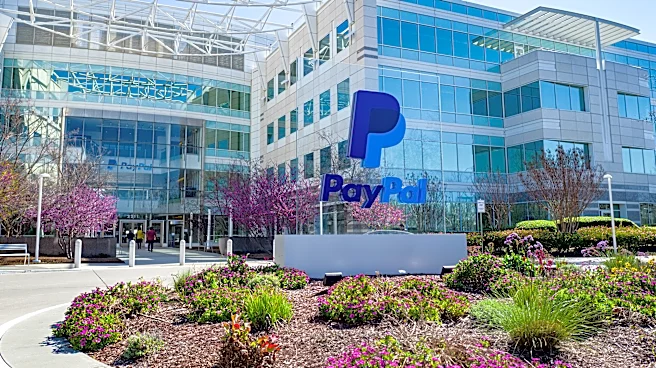
PayPal Holdings (PYPL) is under renewed market scrutiny following a significant leadership reshuffle, which includes the appointment of a new CFO, new heads for key business units like Venmo and crypto, and an additional board member. Despite a recent
3.72% one-day share price rebound, the company's stock has seen an 11.24% decline over the past 90 days and a substantial 70.15% drop in total shareholder return over the last five years. This mixed performance has led to questions regarding PayPal's true valuation. According to an investor in the Simply Wall St Community, Benjamin_Ziegler, PayPal is being undervalued by the market, which he believes is treating it as a 'structurally dying payments company' despite its strong fundamentals, including $6.8 billion in annual free cash flow, a net-cash balance sheet with approximately $13.5 billion cash against $11.6 billion debt, 440 million active accounts, and a total payment volume of about $464 billion per quarter, still growing at roughly 11%.
Why It's Important?
The market's perception of PayPal as undervalued, despite its robust financial metrics and extensive user base, highlights a disconnect between fundamental performance and investor sentiment. This situation is critical for current shareholders who have experienced significant losses over the past five years and for potential investors weighing the company's future. The leadership changes are an attempt to reset expectations and address execution concerns, which are crucial for regaining investor confidence. If the market continues to price PayPal at approximately 8x earnings, it suggests a deep skepticism about its growth prospects or its ability to maintain profitability in competitive segments. The outcome of this valuation debate will significantly impact PayPal's ability to attract and retain investors, influence its strategic decisions, and potentially affect its market capitalization and future access to capital.
What's Next?
The immediate focus for PayPal will be on demonstrating that the new leadership can stabilize and improve the company's performance, particularly in areas like Branded Checkout and lower-margin segments. The market will be closely watching for signs that the new strategies are effective in driving growth and profitability. If the company can show consistent execution and a clear path to leveraging its strong cash flow and large user base, investor sentiment could shift, potentially leading to a re-rating of its stock closer to the $68 fair value estimated by some analysts. Conversely, continued weakness in key segments or a failure to meet market expectations could further entrench the current undervalued perception, making it harder for PayPal to recover its previous market standing.
Beyond the Headlines
The situation at PayPal reflects a broader trend in the technology and fintech sectors where established giants face challenges from newer, agile competitors and evolving consumer preferences. The market's skepticism, despite strong underlying financials, suggests that investors are increasingly prioritizing growth narratives and future potential over current profitability and market share. This dynamic can lead to significant valuation disparities and pressure on companies to constantly innovate and adapt. For PayPal, the challenge extends beyond financial metrics to redefining its role in a rapidly changing digital payments landscape, where competition from traditional banks, other fintechs, and even tech giants is intensifying. The success of its leadership reshuffle will not only depend on internal execution but also on its ability to articulate a compelling vision for future growth that resonates with a demanding market.