

What's Happening?
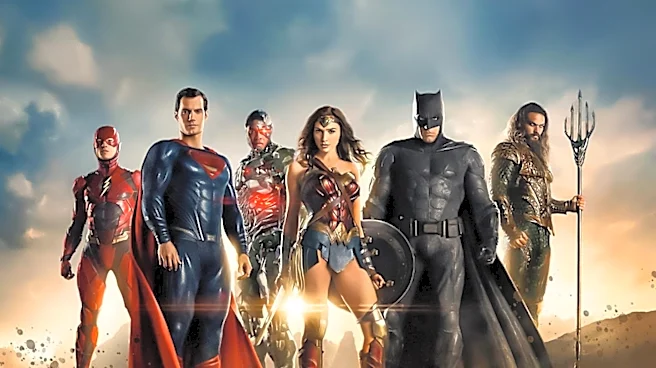
Actress Gal Gadot has voiced her disapproval regarding how DC Studios managed Henry Cavill's departure from his role as Superman. Gadot stated that the 'Henry situation was not handled elegantly, to say the least.' This criticism comes as Gadot herself
confirms that a third 'Wonder Woman' film is no longer in development, despite earlier assurances from DC Studios co-CEOs James Gunn and Peter Safran that they would develop it with her. Gadot indicated that she observed the treatment of other actors, including Cavill and director Patty Jenkins, and found it lacking in elegance. The situation surrounding Cavill's exit was reportedly complex, with Dwayne 'The Rock' Johnson having previously intervened to bring Cavill back as Superman, leading to a cameo in 'The Flash' and plans for 'Man of Steel 2.' However, DC Studios ultimately decided to pursue a new, younger Superman, which led to Cavill's final departure. Gadot also mentioned that her personal life, particularly with four children, makes it difficult for her to commit to the demanding schedule of another 'Wonder Woman' film.
Why It's Important?
This development highlights ongoing challenges and criticisms within the entertainment industry, specifically concerning the management of talent and franchise direction at major studios like DC Studios. The public comments from a prominent actress like Gal Gadot can influence fan perception and potentially impact future collaborations between high-profile talent and the studio. The 'inelegant' handling of Cavill's exit, as described by Gadot, could contribute to a narrative of instability or poor communication within DC Studios, potentially affecting investor confidence or the willingness of other actors and filmmakers to commit to their projects. Furthermore, the decision to recast iconic roles like Superman and Wonder Woman, coupled with the perceived mishandling of existing talent, reflects a broader trend in Hollywood where studios are re-evaluating their franchise strategies, often leading to significant shifts in creative direction and personnel. This can have ripple effects across the industry, influencing how contracts are negotiated, how talent is retained, and how major cinematic universes are planned and executed.
What's Next?
Following these statements, DC Studios will likely continue with its planned reboot of the DC Universe, which includes casting a new, younger Superman and potentially a new Wonder Woman. Adria Arjona is rumored to be cast as the new Wonder Woman in the upcoming 'Man of Tomorrow,' with Ana Nogueira writing the script for the reboot. The studio will need to navigate public and fan reactions to these changes, especially given the strong sentiments expressed by former stars like Gal Gadot. The focus will shift to the success of the new iterations of these characters and how well the new creative direction resonates with audiences. For Henry Cavill, his career will continue with new projects, including upcoming films like 'Voltron' and 'Highlander.' Gal Gadot will also pursue other acting opportunities, having indicated that her current life circumstances make a return to the demanding role of Wonder Woman impractical. The industry will be watching to see if DC Studios can successfully transition to its new vision while maintaining positive relationships with past talent.
Beyond the Headlines
The situation surrounding Henry Cavill's exit and Gal Gadot's comments extends beyond mere casting decisions, touching upon the broader dynamics of power and communication within large film studios. The 'inelegant' handling suggests a lack of transparency or respect in how long-standing actors are informed of major career changes, potentially fostering an environment of uncertainty for talent. This raises ethical questions about studio responsibility towards actors who have invested years in iconic roles. Moreover, the public nature of these criticisms can erode trust between studios and the creative community, potentially leading to more cautious engagements in the future. The emphasis on a 'new, younger Supes' also reflects a commercial strategy to refresh franchises and appeal to new demographics, which can sometimes come at the expense of established fan bases and the continuity of beloved portrayals. This ongoing tension between creative vision, commercial viability, and talent relations will continue to shape the future of cinematic universes.