







What's Happening?
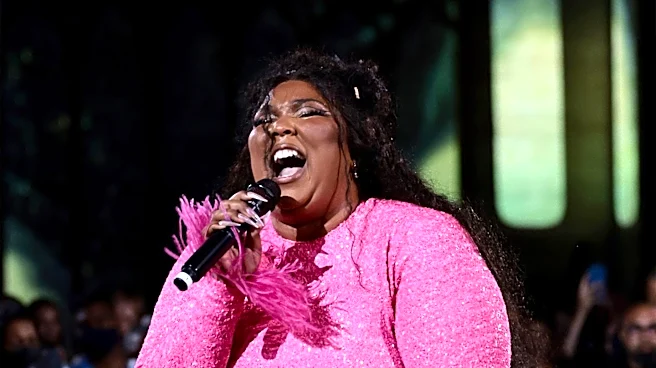
Lizzo recently discussed the profound impact of a lawsuit filed by her former backup dancers on her career and emotional state during an appearance on Dax Shepard's 'Armchair Expert' podcast. The lawsuit, which alleged sexual, racial, and religious harassment,
led her to believe her musical career was over. Despite a recent legal victory where a federal court dismissed remaining claims against her touring company, Lizzo admitted to questioning whether audiences still desired her music. She described reaching a 'very, very low place' and feeling that her life, which had been synonymous with music, was effectively over due to the intense public backlash. This period of controversy followed years of significant commercial success, including multiple Grammy Awards and expansions into television, documentaries, and fashion. The singer emphasized that the experience forced her to re-evaluate her identity, separating it from her professional achievements.
Why It's Important?
This candid reflection from Lizzo highlights the significant pressures and personal toll that public scrutiny and legal battles can exert on high-profile artists in the entertainment industry. Her experience underscores how quickly public perception can shift, even for artists with established careers and widespread acclaim. The commercial struggles of her latest album, 'BITCH,' despite a legal win, illustrate the lasting impact of such controversies on an artist's marketability and audience reception. This situation is important for understanding the intersection of celebrity culture, legal challenges, and public opinion, demonstrating how allegations, even if legally dismissed, can profoundly affect an artist's career trajectory and mental well-being. It also sheds light on the broader challenges faced by public figures in navigating personal and professional crises under intense media and social media scrutiny.
What's Next?
Following her recent legal victory and candid podcast appearance, Lizzo's immediate future will likely involve efforts to rebuild her musical career and reconnect with her audience. Her admission of questioning audience demand for her music suggests a potential shift in her approach to releasing new material or engaging with fans. The commercial performance of her latest album indicates that regaining her previous level of success may require sustained effort and a strategic re-engagement with the public. Future steps could include more public appearances, interviews, or creative projects aimed at addressing the past controversies and reaffirming her artistic identity. The entertainment industry will be watching to see how she navigates this period of rebuilding and whether her legal wins translate into renewed commercial and critical success.
Beyond the Headlines
Lizzo's journey delves into the deeper implications of identity and self-worth in the context of a highly public career. Her realization that she needed to separate her identity from her professional achievements—'knowing who you are and not what you do'—speaks to a universal struggle, amplified by the unique pressures of celebrity. This personal transformation, born from adversity, could influence her artistic output, leading to music that is more introspective or addresses themes of resilience and self-acceptance. Furthermore, her experience contributes to the ongoing conversation about accountability, cancel culture, and the long-term effects of public allegations on individuals, regardless of legal outcomes. It raises questions about the nature of public judgment and the potential for redemption and artistic evolution in the face of significant personal and professional challenges.