






What's Happening?
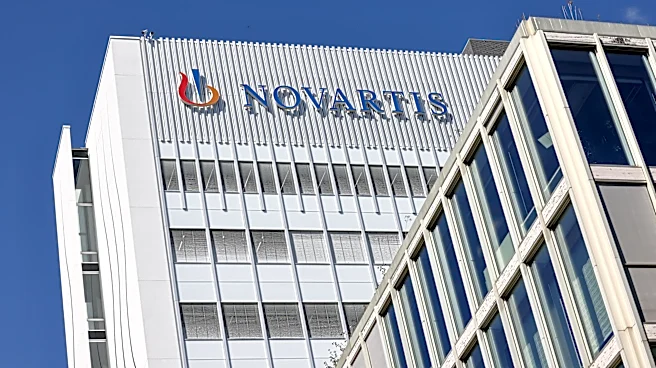
Novartis CEO Vas Narasimhan has provided specific figures on how artificial intelligence (AI) is transforming the company's research and development processes. During an investor day in London on November 19, and reiterated in a Financial Times interview
on November 23, Narasimhan stated that AI has been most impactful in early drug discovery, shortening this phase by up to two years from its typical four-year duration. Additionally, AI simulations are improving the accuracy of enrollment forecasts for clinical trials by 50% and cutting the time to produce clinical reports by 25%, with approximately 90% of content in Novartis's development work now AI-assisted. The company's aspiration is to reduce the average drug development time from 12 years to about 8 years within a decade and increase the success rate of drugs in human trials from 8% to 12%. However, Fiona H. Marshall, Novartis's president of biomedical research, noted that many AI-generated ideas do not hold up in cell models or in patients. Christian Diehl, Novartis's chief data and digital officer, highlighted the company's advantage in having over 150 petabytes of organized research data, collected over a decade through its Data42 program, which provides a competitive edge in leveraging open-source AI models.
Why It's Important?
The integration of AI into Novartis's drug discovery and development process signifies a pivotal shift in the pharmaceutical industry, with substantial implications for U.S. healthcare and the global market. Shortening the early drug discovery phase by two years can accelerate the pipeline of potential new medicines, potentially bringing life-saving treatments to patients faster. This efficiency gain could also reduce the immense costs associated with drug development, which might eventually translate into more affordable medications or increased investment in novel research areas. The improved accuracy in clinical trial enrollment forecasts and faster report generation can streamline the entire trial process, making it more efficient and potentially increasing the success rate of trials. For U.S. patients, this could mean quicker access to innovative therapies for various diseases. For the U.S. pharmaceutical sector, Novartis's advancements highlight the growing importance of data infrastructure and AI capabilities as key differentiators in a competitive landscape, pushing other companies to invest similarly to maintain their edge.
What's Next?
Novartis plans to continue leveraging its extensive data assets and AI capabilities to further optimize its drug development processes. The company will focus on translating the efficiencies gained in early discovery into higher success rates in clinical trials, aiming to achieve its aspiration of reducing overall development time to eight years and increasing trial success rates to 12% within a decade. The industry will be closely watching whether the three neurodegeneration targets identified with AI, currently in preclinical work, advance to human trials. The effectiveness of AI in predicting which drug candidates will succeed in patients remains a critical area for validation. Furthermore, the pharmaceutical sector will observe how Novartis's AI-driven approach impacts its competitive standing and whether it sets new benchmarks for efficiency and innovation. The ongoing challenge will be to ensure that AI-generated ideas are robust enough to withstand rigorous testing in human trials, moving beyond theoretical potential to tangible patient benefits.
Beyond the Headlines
Novartis's embrace of AI in drug discovery illuminates a broader ethical and scientific discussion within the life sciences. While AI promises unprecedented speed and efficiency, the caution expressed by Fiona H. Marshall regarding AI-generated ideas not holding up in biological models underscores the complex interplay between computational power and biological reality. This highlights the ongoing need for human expertise and rigorous experimental validation, even as AI tools become more sophisticated. The strategic advantage derived from Novartis's 150 petabytes of organized research data also raises questions about data ownership, privacy, and equitable access to such valuable resources across the industry. As AI becomes more central to drug development, the ethical implications of algorithmic bias in patient selection for trials or in drug design itself will become increasingly pertinent. The long-term impact of AI on the pharmaceutical workforce, including the evolution of roles for scientists and researchers, is another significant dimension to consider, as human-AI collaboration becomes the norm in the quest for new medical breakthroughs.