




What's Happening?
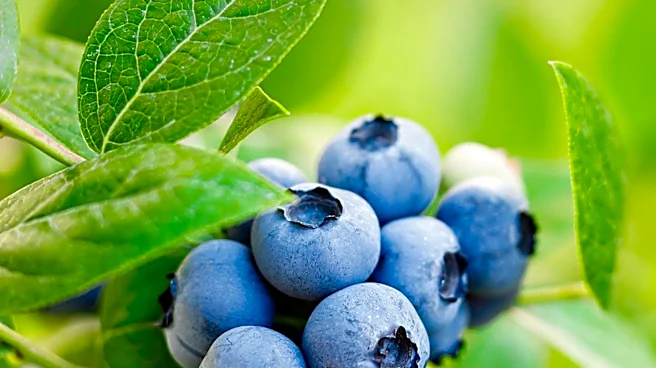
The wild blueberry industry in Maine is experiencing a significant decline in acreage, primarily driven by escalating costs and adverse weather conditions. Industry leaders, including Peter Jordan, owner of Blue Ridge Farms, and Eric Venturini, executive
director of the Wild Blueberry Commission of Maine, convened at the Wild Blueberry Resilience Summit in Waltham to address these challenges. Since 2020, the industry has lost approximately 8% of its acreage annually, with 2025 being particularly challenging, leading to anecdotal reports and visible sales of blueberry land. Farmers are struggling with the long payment cycles, sometimes waiting until Christmas for harvest payments, which makes it difficult to assess the profitability of harvesting. This financial strain is causing many family farms to consider ceasing operations or selling their land for development, threatening a long-standing state heritage.
Why It's Important?
The shrinking wild blueberry acreage in Maine has significant implications for the state's agricultural economy and cultural heritage. The industry supports numerous family farms, some of which have been passed down through generations. The loss of these farms not only impacts individual livelihoods but also diminishes the unique agricultural landscape of Maine. Furthermore, the sale of blueberry land for development represents an irreversible loss of valuable agricultural resources. The challenges faced by the wild blueberry industry highlight broader issues within U.S. agriculture, such as the vulnerability of small and specialized farms to economic pressures and climate change. Without intervention, the decline could lead to a reduction in local food production, a loss of biodiversity associated with wild blueberry fields, and a shift in the economic fabric of rural Maine communities.
What's Next?
Industry leaders are calling for substantial support from the state legislature to mitigate the ongoing decline. Eric Venturini emphasized the need for investments in capital improvements, grants, and low-interest loan programs to help farmers sustain their operations. State lawmakers, including State Sen. Marianne Moore, R, and State Sen. Nicole Grohoski, D, attended the summit to understand the issues and explore potential legislative solutions. Senator Moore highlighted the importance of preserving family businesses and ensuring future generations can continue farming. Senator Grohoski pointed to research as a potential path forward, suggesting that scientific advancements could lead to more affordable and efficient farming methods. The immediate next steps involve legislative discussions and the potential implementation of financial aid and research initiatives to stabilize and revitalize the wild blueberry industry.
Beyond the Headlines
The plight of Maine's wild blueberry industry underscores a deeper societal challenge concerning the preservation of traditional agricultural practices and local food systems in the face of modernization and economic pressures. The shift from farming to development reflects changing land use patterns and the increasing value placed on real estate over agricultural production. This situation also raises questions about consumer responsibility and the willingness to support local, heritage industries through purchasing choices. The long-term implications could include a greater reliance on imported produce, a loss of unique regional food identities, and a decline in the rural way of life. The ethical dimension involves balancing economic development with environmental stewardship and cultural preservation, ensuring that the heritage and ecological benefits of wild blueberry fields are not sacrificed for short-term gains.