





What's Happening?
The Washington County Museum of Fine Arts in Hagerstown, Maryland, is set to open a new exhibition titled 'American Animalier: Human and Animal Entanglements in Art, 1750 to Present.' The exhibition, curated by Linda Johnson, PhD, and Sarah Wolfe, will
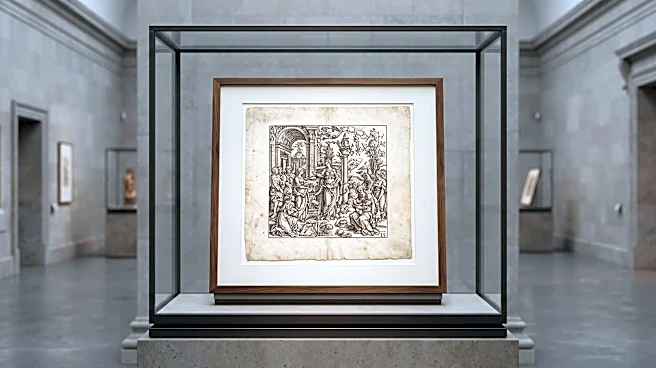
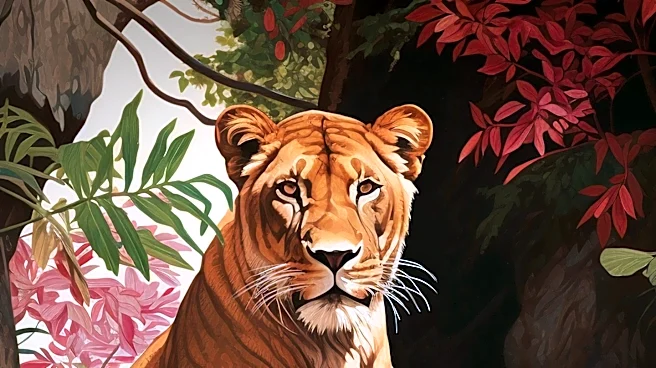
feature over 100 works, including paintings, sculptures, prints, drawings, and decorative arts, spanning more than two centuries of American art. The focus is not merely on animals as subjects but on what their representations reveal about the artists, people, and social contexts of their creation. Animals are depicted in various roles: companions, workers, food sources, symbols, and participants in recreation and entertainment, as well as existing independently of human life.
Why It's Important?
This exhibition is significant for the U.S. art community and public as it offers a unique lens through which to understand American history, culture, and societal values. By analyzing animal imagery, visitors can gain insights into evolving human-animal relationships and how these reflect broader changes in society, such as westward expansion, industrialization, and changing attitudes towards nature. The inclusion of works by both renowned artists like John James Audubon and lesser-known figures provides a comprehensive view of animal representation in American art. This approach encourages critical thinking about the ethical, cultural, and historical dimensions of human interaction with the animal world, fostering a deeper appreciation for both art and environmental stewardship.
What's Next?
The 'American Animalier' exhibition will open to the public on Saturday, November 21, 2026, and will remain on view through April 18, 2027. A scholarly catalog featuring essays by the curator and other experts will accompany the exhibition, providing further academic context. The museum will also host an Exhibition Preview Party on Thursday, November 19, for members and non-members. This event and the exhibition itself are expected to draw visitors interested in art, history, and animal studies, potentially sparking public discourse on the themes presented. The museum's commitment to ambitious exhibitions and scholarly publications suggests a continued role in enriching cultural understanding.
Beyond the Headlines
The exhibition delves into the less obvious implications of animal imagery, exploring how animals serve as powerful symbols that convey human ideas and ideals. For instance, Emily Clayton Bishop’s 'Conquest of the Northwest Through Agriculture' uses a buffalo to symbolize American agricultural prosperity and western expansion, while also implicitly acknowledging the complex history of Native American displacement and the near-eradication of buffalo. Similarly, Willard Leroy Metcalf’s 'Design for Ceiling' uses horses to convey strength and grandeur. This highlights how art can be a medium for both celebration and critical reflection on historical events and societal impacts. The exhibition ultimately challenges viewers to look beyond the surface, questioning what animal depictions reveal about human values, beliefs, and responsibilities towards the natural world.